


JOURNAL
Gintani Exhausts
By Alaa Halabi
Gintani Exhausts: When Factory Performance Isn't Enough
There's a moment in every performance car owner's journey when they realize the vehicle they purchased, as exceptional as it might be, left potential on the table. The exhaust note could be deeper, more aggressive, more present. The power delivery could be sharper with less restriction in the path between combustion chamber and atmosphere. The weight could be reduced through strategic material choices. Factory engineers made compromises to satisfy global markets, noise regulations, and diverse customer preferences. Gintani exists for the customers who reject these compromises and demand the absolute maximum from their vehicles.
What began as a California-based tuning shop specializing in exotic and luxury performance vehicles has evolved into one of the most respected names in high-end aftermarket exhaust systems. Gintani doesn't just replace factory exhaust components with louder alternatives. They engineer complete exhaust solutions that transform how vehicles sound, perform, and feel while maintaining the reliability and sophistication that owners of six-figure automobiles rightfully expect. Understanding what makes Gintani exhausts special requires examining their approach to design, their obsessive attention to materials and manufacturing, and the philosophy that separates genuine engineering from simple parts replacement.
The Philosophy: Engineering Performance, Not Just Volume
The aftermarket exhaust industry is crowded with companies offering products that prioritize maximum volume and aggressive sound over all other considerations. Install their system and your car becomes substantially louder, possibly setting off car alarms and annoying everyone within several blocks. This approach appeals to certain customers but fundamentally misunderstands what discerning performance car owners actually want.
Gintani's philosophy centers on engineered performance enhancement that improves multiple attributes simultaneously. Yes, the exhaust note becomes more present and more characterful, but it's refined rather than crude, purposeful rather than obnoxious. The sound quality matters as much as volume, with attention paid to tone, frequency distribution, and how the note changes across the rpm range. The goal is creating a soundtrack worthy of the vehicle's capabilities and price point, not simply making it louder for loudness' sake.
Power gains are genuine and measurable. Factory exhaust systems, particularly on turbocharged vehicles, often include restrictive catalytic converters, sound-deadening resonators, and compromised pipe routing that increases backpressure unnecessarily. Gintani exhausts address these restrictions through larger diameter piping, high-flow catalytic converters or cat-delete options where legal, optimized merge collectors, and streamlined routing that reduces bends and minimizes flow restrictions. The result is reduced backpressure that allows the engine to breathe more freely, producing measurable power increases throughout the rpm range.
Weight reduction is substantial in many applications. Factory exhaust systems use heavy steel construction to manage costs and durability. Gintani uses titanium extensively, a material that's significantly lighter while offering superior strength and heat resistance. The weight savings often exceed 20 kilograms, positioned low and toward the rear of the vehicle where it improves weight distribution and handling dynamics. For vehicles where every kilogram matters, this reduction is meaningful and tangible.
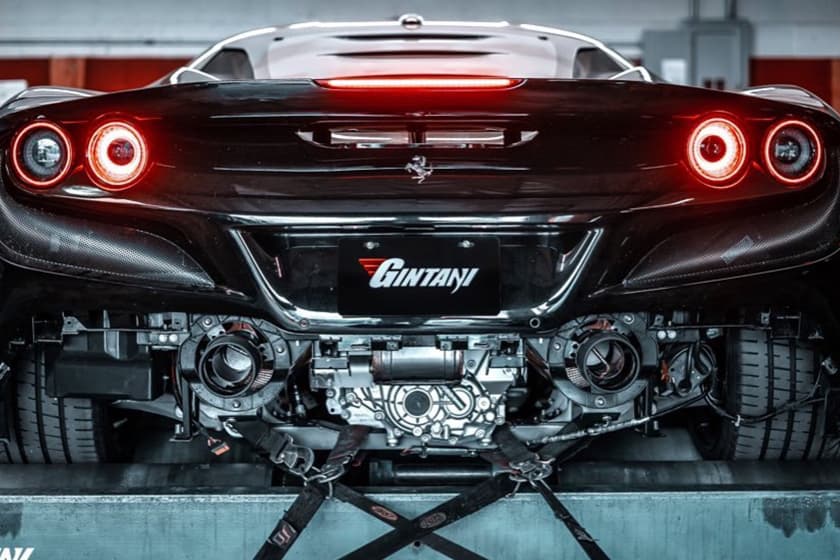
The aesthetic component cannot be ignored. Gintani exhaust tips are crafted to complement the vehicle's design language while announcing that something special has been installed. The finishes range from polished titanium to carbon fiber to various coatings that provide distinctive appearance while resisting discoloration from exhaust heat. The tips are sized and positioned to fill the bumper cutouts properly, creating visual presence that matches the acoustic enhancements.
Materials and Manufacturing: No Compromises
Gintani's commitment to titanium construction separates them from competitors using stainless steel or mild steel. Titanium offers multiple advantages: it's approximately 45 percent lighter than steel at equivalent strength, it resists corrosion exceptionally well even in harsh environments, it can handle extreme temperatures without degradation, and it develops a beautiful heat patina that creates visual interest over time. The material costs significantly more than steel and requires specialized welding equipment and techniques, but the performance and longevity benefits justify the investment.
The titanium used in Gintani exhausts is aerospace-grade material meeting stringent specifications for composition and quality. This isn't recycled or industrial-grade titanium but rather the same material used in aircraft and racing applications where failure isn't acceptable. The tubing wall thickness is optimized to balance weight savings with structural integrity, thin enough to minimize mass but thick enough to handle vibration, thermal cycling, and installation stresses without cracking or deforming.
The welding quality is exceptional, with all seams TIG-welded by certified craftspeople who understand titanium's unique requirements. Titanium welding requires inert gas shielding both inside and outside the weld zone to prevent contamination that weakens the joint. The welds must be executed properly the first time; excessive heat input or multiple passes can compromise material properties. Gintani's welders have the skills and experience to create joints that are stronger than the base material while maintaining appearance standards appropriate for components visible beneath luxury vehicles.
The mandrel bending process used for all Gintani tubing ensures consistent internal diameter throughout bends. Cheaper manufacturing methods crush the tubing during bending, creating restrictions that defeat the purpose of larger diameter piping. Mandrel bending uses internal supports that maintain the tube's shape during forming, resulting in smooth, unrestricted flow paths that maximize performance gains. This process is slower and more expensive but essential for achieving the flow characteristics that justify premium exhaust systems.
The fasteners, hangers, and mounting hardware all receive similar attention to quality and detail. Stainless steel hardware is used throughout, with anti-seize compound applied during assembly to prevent galling and ensure the exhaust can be removed cleanly if necessary. The hangers are designed to isolate vibration while maintaining secure mounting under all operating conditions. The clamps are sized appropriately and positioned to prevent leaks while allowing thermal expansion. Every component, regardless of how minor it might seem, is specified and sourced to meet Gintani's quality standards.
Sound Engineering: The Science of Acoustics
Creating the perfect exhaust note requires understanding acoustics, harmonics, and how sound waves interact within exhaust systems. Gintani employs sophisticated analysis tools including sound spectrum analyzers and computer modeling to predict and refine exhaust note characteristics before manufacturing prototype systems. This scientific approach ensures the final product delivers the intended sound quality rather than hoping that good intentions produce good results.
The exhaust note is composed of multiple frequency components created by exhaust pulses from individual cylinders. The firing order, cylinder count, and exhaust system geometry all influence which frequencies are amplified and which are attenuated. Gintani's engineers manipulate these variables through strategic placement of X-pipes or H-pipes that merge exhaust streams, resonators that cancel specific frequencies, and carefully calculated pipe lengths that create desired harmonic characteristics.
The volume level varies with engine load and rpm, which is exactly how it should work. At idle and light throttle, the exhaust is present but not overwhelming, allowing civilized operation in residential areas or parking structures. Under acceleration, the note builds progressively with increasing drama as rpm rises. At full throttle, the sound is aggressive and purposeful without becoming painful or creating excessive drone during highway cruising. This dynamic range requires careful engineering of internal flow paths and strategic use of sound management components.
Drone, that annoying resonance that occurs at specific engine speeds and creates cabin pressure waves that cause headaches and fatigue, is actively designed out of Gintani systems. The engineers identify the frequencies where drone typically occurs and implement solutions that cancel or redirect those specific wavelengths. This might involve resonator placement, pipe diameter changes, or strategic variations in pipe length that destructively interfere with problematic frequencies. The result is exhaust systems that sound excellent across all operating conditions without the annoying characteristics that make aggressive exhausts unbearable for daily driving.
The cold-start behavior receives specific attention. Many aftermarket exhausts are embarrassingly loud during cold starts, waking neighborhoods and drawing unwanted attention. Gintani systems manage cold-start volume through internal design features that balance the need for mechanical clearance (engines expand as they warm) with acoustic considerations. The result is cold starts that are more characterful than stock but not obnoxiously anti-social.
Application-Specific Development: Tailored Solutions
Gintani doesn't produce universal-fit exhaust systems that work adequately on multiple vehicles. Each application receives dedicated engineering attention with systems designed specifically for that vehicle's engine characteristics, chassis layout, and acoustic properties. This approach requires substantially more development time and investment but produces results that generic systems cannot match.
The development process begins with purchasing or borrowing the target vehicle and installing comprehensive instrumentation. Baseline measurements capture factory exhaust system flow characteristics, backpressure at various rpm and load points, sound levels inside and outside the vehicle, and weight distribution. The factory system is then analyzed to identify restrictions, understand the engineering decisions Mercedes or Lamborghini or Ferrari made, and determine which compromises can be eliminated without creating problems.
Prototype systems are fabricated and tested extensively. The vehicles are driven on streets, highways, and sometimes racetracks to evaluate performance across all operating conditions. Sound recordings are made from multiple positions to ensure the exhaust note is pleasing from both inside and outside the vehicle. Power measurements on dynamometers quantify the performance gains. Thermal imaging identifies any heat management issues that need addressing. Durability testing ensures the systems can withstand the vibration, thermal cycling, and mechanical stresses that occur during enthusiastic driving.
The iteration continues until the system meets Gintani's standards for sound quality, performance enhancement, weight reduction, and reliability. This might require multiple prototype revisions, particularly for complex applications with limited space or challenging acoustic characteristics. The investment in proper development ensures that when a Gintani exhaust is released for a specific vehicle, it represents the best possible solution rather than a rushed product pushed to market before refinement is complete.
For vehicles with turbochargers, the development becomes even more complex. The exhaust system interacts directly with turbocharger efficiency and boost pressure control. Excessive restriction hurts power, but insufficient backpressure can cause boost control issues or create conditions where the wastegate cannot regulate pressure properly. Gintani's engineers must balance these competing requirements through careful turbine housing selection if applicable, precise wastegate tuning, and exhaust system geometry that optimizes flow without creating control problems.
The Installation Experience: Professional Execution Required
Gintani exhausts are designed for professional installation by qualified technicians familiar with high-performance vehicles. This isn't because the systems are unnecessarily complicated but because proper installation requires specialized tools, adequate workspace, and understanding of how exhaust systems interact with surrounding components. The investment in a premium exhaust system deserves professional installation that ensures it performs as engineered.
The installation typically requires lifting the vehicle properly and safely, which means professional lifts or properly rated jack stands, not the marginal equipment found in many home garages. The factory exhaust must be removed carefully to avoid damaging oxygen sensors, heat shields, or surrounding components. The mounting points must be cleaned and inspected, with any corrosion addressed before installing the new system. The new exhaust is test-fitted to ensure proper clearance to chassis components, suspension elements, and drivetrain components before final installation.
Proper torque specifications matter significantly for exhaust components. Over-tightening can crush gaskets, strip threads, or crack flanges. Under-tightening allows leaks that hurt performance and create annoying noises. Professional installers have the torque wrenches and experience to tighten fasteners correctly, with anti-seize compound applied where appropriate to prevent future removal difficulties. The hangers must be adjusted properly to support the exhaust weight while allowing thermal expansion without creating stress concentrations.
After installation, the vehicle must be started and carefully inspected for leaks, unusual vibrations, or contact with chassis components. The installer checks clearances throughout the suspension travel range to ensure nothing contacts during cornering or over bumps. The exhaust note is evaluated at various rpm levels to verify it matches expectations. Any issues are addressed immediately rather than hoping they'll resolve themselves or telling the customer that unusual noises will "go away after break-in."
In Dubai's context, finding qualified installers familiar with exotic and luxury vehicles is essential. The wrong installation approach can damage expensive vehicles or create problems that negate the benefits of premium exhaust systems. Reputable shops with experience on high-end vehicles understand the specific requirements and have the proper equipment to execute installations professionally. The additional cost of professional installation is minimal compared to the exhaust system's cost and the vehicle's value.
The Legal Considerations: Understanding Regulations
Exhaust system modifications exist in complex legal landscape that varies by jurisdiction. Some markets have strict noise regulations that limit sound levels measured under specific test conditions. Others have emissions requirements that mandate catalytic converters meeting certain standards. Still others have visual inspection requirements or prohibit modifications that alter the vehicle from manufacturer specifications. Understanding these regulations is essential before purchasing and installing aftermarket exhaust systems.
Gintani offers multiple configurations for most applications, recognizing that customers face different regulatory environments. Systems with high-flow catalytic converters maintain emissions equipment while reducing restriction compared to factory cats. These systems often comply with regulations in markets that allow aftermarket cats meeting certain standards. Cat-delete systems eliminate catalytic converters entirely for maximum flow and performance but are legal only for racing vehicles or in jurisdictions without emissions testing requirements.
The sound level regulations present particular challenges. Many jurisdictions have decibel limits measured at specific distances under specific conditions. Factory exhaust systems are engineered to comply with these regulations with margin to account for manufacturing variations and aging. Aftermarket systems that increase sound levels may violate these regulations even if the increase seems modest. The legal risk varies by jurisdiction, with some areas enforcing strictly while others rarely measure or enforce sound regulations.
In the UAE, regulations generally focus on visible modifications and overall vehicle condition rather than specific exhaust sound levels, though excessively loud exhausts can draw official attention. The annual vehicle inspection process checks emissions equipment but typically doesn't measure sound levels precisely. This creates relatively permissive environment for exhaust modifications compared to some European or American jurisdictions. However, discretion remains advisable; an exhaust that's obnoxiously loud during cold starts or normal driving can create problems that more refined systems avoid.
The warranty implications must be considered. Vehicle manufacturers may claim that aftermarket exhaust systems void warranties on related components. In practice, manufacturers must demonstrate that the aftermarket part caused a specific failure to deny warranty coverage, but this often requires legal action that most customers want to avoid. Understanding these risks and making informed decisions about modifications and warranty protection is essential before proceeding with exhaust system changes.
The Performance Gains: Quantified Improvements
The power gains from Gintani exhaust systems vary by application but are consistently measurable and meaningful. Naturally aspirated vehicles typically see gains of 10 to 20 horsepower at the wheels from exhaust-only modifications, with larger improvements when combined with intake and tuning modifications. The gains are most noticeable at higher rpm where exhaust restriction most severely limits power output.
Turbocharged vehicles often experience more dramatic improvements. Reducing backpressure allows turbochargers to spool faster and operate more efficiently, improving both boost pressure and overall engine breathing. Power gains of 20 to 40 horsepower are common from exhaust modifications alone, with even larger improvements possible when combined with turbocharger upgrades or engine management tuning. The gains extend across the entire rpm range, not just peak power, making the vehicle feel more responsive in all driving situations.
The throttle response improves measurably. With less restriction fighting the engine's efforts to expel exhaust gases, the engine can accelerate through the rpm range more quickly. This creates sensation of improved response even when peak power hasn't changed dramatically. The vehicle feels more eager, more willing to rev, more connected to throttle inputs. For drivers who value engagement and responsiveness, these characteristics matter as much as ultimate power output.
The weight reduction from titanium construction contributes to handling improvements that are subtle but real. Removing 20 or 25 kilograms from the rear of the vehicle improves weight distribution, reduces polar moment of inertia, and allows the suspension to control unsprung mass more effectively. The vehicle changes direction slightly more quickly and feels marginally more agile during transitional maneuvers. These improvements are most noticeable to experienced drivers on challenging roads or racetracks.
The fuel economy impact is generally neutral or slightly positive. While the improved flow might suggest increased consumption, the reduced restriction means the engine doesn't work as hard to produce the same power, potentially offsetting any increase. In practice, most customers don't modify exhausts for efficiency reasons, but it's worth noting that performance improvements don't necessarily mean worse economy.
The Market Position: Premium Products for Discerning Customers
Gintani exhausts command premium pricing that reflects their engineering sophistication, material quality, and application-specific development. A complete system often costs between $5,000 and $15,000 depending on the vehicle application and system complexity. This positions Gintani in the upper tier of the aftermarket exhaust market, competing with brands like Akrapovic, Capristo, and Kreissieg rather than mass-market alternatives.
The target customer understands that exhaust systems are investment in the vehicle's performance and character rather than simple accessories. They typically own vehicles costing six figures or more and recognize that proper modifications require quality components and professional installation. They value the engineering development that creates systems optimized specifically for their vehicles rather than accepting universal-fit compromises.
The customer base includes enthusiasts who drive their vehicles regularly and want enhanced sound and performance for personal enjoyment, collectors who maintain vehicles to the highest standards and appreciate premium components, and professional drivers who use their vehicles in competitive or track environments where performance gains matter. The common thread is discernment and willingness to invest in quality rather than accepting mediocre solutions.
In markets like Dubai where exotic and luxury vehicles are particularly common, Gintani exhausts have established strong presence. The local automotive culture appreciates performance enhancements and distinctive sound, creating natural market for premium exhaust systems. The climate doesn't present particular challenges for titanium construction, which resists corrosion better than steel regardless of environmental conditions. The availability of qualified installation shops familiar with high-end vehicles makes professional installation accessible.
The resale value consideration is interesting. Quality exhaust systems from respected brands like Gintani typically add value to vehicles when sold to enthusiast buyers who appreciate the modifications. However, some buyers prefer completely stock vehicles and may discount value or request factory exhaust reinstallation. Keeping the factory exhaust system when upgrading allows reinstalling it before sale if desired, though many buyers find that enthusiast purchasers value the Gintani system as desirable upgrade rather than unwanted modification.
The Competition: How Gintani Compares
The premium exhaust market includes several respected competitors, each with distinct approaches and strengths. Akrapovic, based in Slovenia with extensive Formula 1 and MotoGP experience, produces excellent titanium exhausts with motorsport engineering pedigree. Their systems are beautifully crafted and deliver exceptional sound quality, though they typically command even higher prices than Gintani alternatives.
Capristo, a German manufacturer, focuses on sophisticated valved exhaust systems that allow drivers to switch between quiet and aggressive modes electronically. Their engineering is excellent and their systems provide versatility that fixed-configuration exhausts cannot match. The added complexity increases cost and introduces additional components that could potentially fail, but the functionality appeals to customers who want variable character.
Kreissieg, another German brand, emphasizes pure performance with less concern for sound management than some competitors. Their systems are loud, aggressive, and deliver measurable power gains, appealing to customers who prioritize maximum performance and aren't concerned about noise regulations or livability compromises.
iPE (Innotech Performance Exhaust) from Taiwan offers excellent value in the premium exhaust segment, with sophisticated valved systems at prices below European competitors. The quality is high and the engineering is competent, though the brand lacks the heritage and prestige that some customers value. For buyers prioritizing performance per dollar, iPE represents compelling alternative.
Gintani positions between these alternatives, offering titanium construction and application-specific engineering at prices below the most expensive European brands while maintaining higher standards than budget alternatives. The California-based development and manufacturing appeals to American customers who prefer domestic products, though the brand has international presence and reputation. The company's focus on exotic and luxury applications means their expertise is concentrated exactly where their target customers' vehicles exist.
The Installation and Ownership Experience
Customers who've installed Gintani exhausts consistently report that the systems transform their vehicles' character in ways that justify the investment. The sound improvement is immediately apparent, with cold starts that announce something special has been installed and acceleration runs that provide soundtrack worthy of the vehicle's performance capabilities. The sound isn't just louder; it's more refined, more purposeful, more exciting without being obnoxious or tiresome during extended driving.
The performance improvement is tangible particularly in turbocharged applications where backpressure reduction directly impacts boost response and power delivery. The throttle feels more responsive, the engine more willing to rev, the power delivery more linear throughout the rpm range. These improvements manifest during every drive, not just during maximum-attack driving but during normal operation where improved responsiveness enhances the daily driving experience.
The weight reduction is most noticeable to drivers who regularly push their vehicles hard on challenging roads or racetracks. The handling feels slightly sharper, the car marginally more eager to change direction, the overall balance improved through better weight distribution. These are subtle improvements that won't transform a vehicle's fundamental character but add to the overall refinement and capability that justify premium pricing.
The durability has proven excellent across thousands of installations and millions of collective kilometers. Titanium's corrosion resistance means the systems maintain their appearance and function even after years of use in harsh environments. The welds remain intact, the hangers maintain proper support, and the fasteners can be removed cleanly if exhaust service or removal becomes necessary. This longevity justifies the premium pricing by ensuring the investment delivers value throughout extended ownership periods.
The customer service experience matters significantly for products at this price point. Gintani maintains reputation for responsive communication, technical support when needed, and willingness to address any issues that arise during installation or use. For customers investing thousands of dollars in exhaust systems, knowing that support exists if problems occur provides confidence that mail-order alternatives cannot match.
The Verdict: Engineering Excellence for Enthusiasts
Gintani exhausts represent exactly what premium aftermarket components should deliver: measurable performance improvements, enhanced sound quality, reduced weight, and engineering sophistication that respects the vehicles they're designed for. These aren't cheap modifications that prioritize cost reduction over quality, nor are they overpriced products trading on brand prestige without delivering substance. They're properly engineered solutions that improve vehicles in meaningful ways while maintaining the reliability and refinement that luxury performance car owners rightfully expect.
For customers considering exhaust modifications for their exotic or luxury performance vehicles, Gintani deserves serious consideration alongside the most respected European alternatives. The engineering approach is sophisticated, the materials are premium, the manufacturing quality is excellent, and the results deliver on the promises made. The pricing is substantial but proportional to what's provided and competitive within the premium exhaust market segment.
The decision ultimately depends on priorities and preferences. Customers who value maximum sound and don't concern themselves with regulations or livability might choose more aggressive alternatives. Those who prioritize versatility through valved systems might select Capristo. Buyers seeking absolute maximum prestige might choose Akrapovic despite higher costs. But for enthusiasts who want the optimal balance of performance, sound, weight, and engineering sophistication at competitive pricing, Gintani exhausts deliver exactly what they promise.
In Dubai's context where performance modifications are appreciated and luxury vehicles are common, Gintani exhausts provide the differentiation and enhancement that turn already exceptional vehicles into something more personal and more special. The sound improvement alone justifies consideration, but the performance gains and weight reduction make the value proposition compelling for enthusiasts who demand the maximum from their vehicles.
Whether you're modifying a Lamborghini, Ferrari, McLaren, or high-performance Mercedes, Gintani likely offers an exhaust system engineered specifically for your application. The investment is substantial, but for customers who value what properly engineered modifications deliver, the return in enhanced enjoyment, improved performance, and distinctive character makes the cost worthwhile. Factory performance is impressive, but when it's not quite enough, Gintani provides the solution that respects both the vehicle and the enthusiast who drives it.