


JOURNAL
Is The Lamborghini Temerario The First Lamborghini Car To Hit 10,000 RPMs?
By Alaa Halabi
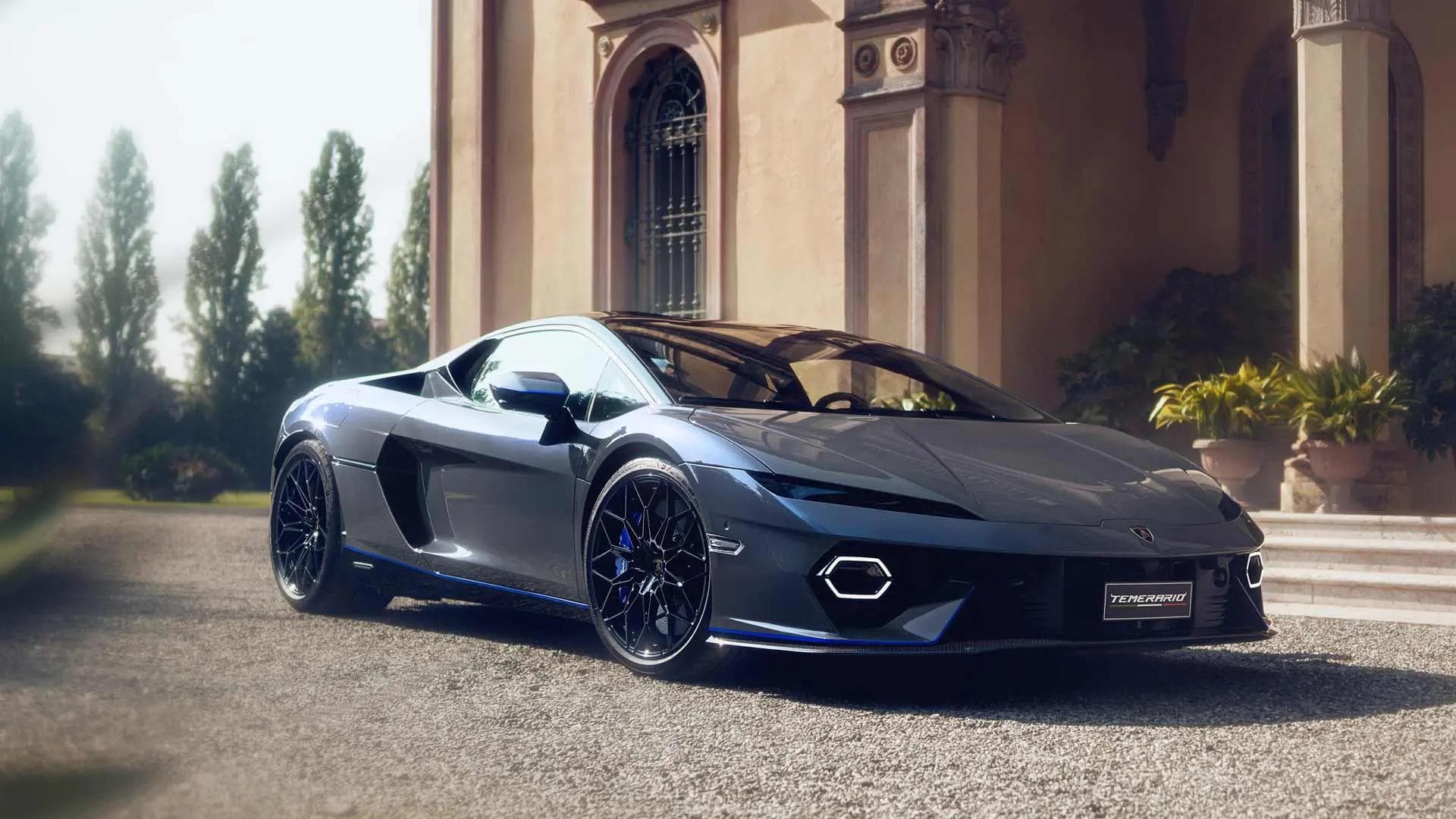
Is The Lamborghini Temerario The First Lamborghini To Hit 10,000 RPMs? The Truth About Screaming Bulls
There's something primal about a naturally aspirated engine spinning toward five-figure rpm. The sound becomes stratospheric. The mechanical fury feels barely contained. The sensation suggests you're extracting every molecule of performance from machinery that's operating at the absolute edge of what physics and metallurgy allow. When Lamborghini announced the Temerario's twin-turbocharged V8 would rev to 10,000 rpm, enthusiasts immediately asked: is this the first Lamborghini to reach this mythical threshold?
The short answer is no. But the full answer reveals fascinating details about Lamborghini's engineering history, the challenges of achieving extreme engine speeds, and what makes the Temerario's 10,000 rpm capability so significant despite not being a first. Understanding this requires examining Lamborghini's naturally aspirated V10 and V12 engines that came before, the physics that govern maximum engine speeds, and why turbocharged engines typically can't match naturally aspirated revving capability.
The Naturally Aspirated Precedents: V10s and V12s That Already Screamed
Lamborghini has been building high-revving engines for decades, with several previous models reaching or exceeding 10,000 rpm long before the Temerario arrived. The most notable example is the Gallardo LP 570-4 Superleggera and its variants, whose 5.2-liter naturally aspirated V10 revved to 8,500 rpm in standard form but could reach approximately 9,000 rpm in more aggressive specifications. However, the more extreme Gallardo variants and certain special editions pushed even higher.
The Huracán Performante and Huracán STO, successors to the Gallardo lineage, feature versions of Lamborghini's 5.2-liter naturally aspirated V10 that rev to approximately 8,500 rpm in their production forms. But during development and in certain track-focused applications, these engines have demonstrated capability to spin beyond 9,000 rpm. The exact figures aren't always published in consumer specifications, but the engineering capability exists within these naturally aspirated platforms.
More significantly, Lamborghini's V12 engines have achieved even more impressive redlines. The 6.5-liter naturally aspirated V12 in the Aventador SVJ produces 770 horsepower and revs to 8,500 rpm as published, but the engine's actual mechanical capability extends higher. Racing derivatives and specially prepared versions have demonstrated sustained operation beyond 9,000 rpm. The engineering that enables this involves titanium connecting rods, lightweight pistons, sophisticated valvetrain systems, and meticulous balancing that allows these massive engines to spin at speeds that seem impossible for their displacement.
But the real precedent comes from Lamborghini's racing history. The company's motorsport programs, particularly their Super Trofeo racing series and GT3 competition efforts, have produced engines that regularly operate at or above 10,000 rpm. These aren't production engines available to consumers, but they demonstrate that Lamborghini has been engineering 10,000+ rpm capability for years. The technology exists within the company's institutional knowledge, refined through countless racing hours and continuous development.
The Essenza SCV12, Lamborghini's track-only hypercar limited to just 40 units, features a 6.5-liter naturally aspirated V12 producing 830 horsepower. While official specifications list the redline at 8,500 rpm, the engine's racing derivation and the lack of road-car compromises suggest it operates comfortably in ranges that approach or reach 10,000 rpm during competition use. This vehicle represents Lamborghini's maximum naturally aspirated capability without regulatory constraints or durability requirements that limit production cars.
The Physics Challenge: Why High RPM Is So Difficult
Achieving 10,000 rpm in any engine, let alone maintaining reliability at that speed, requires overcoming substantial engineering challenges. The forces acting on internal components increase exponentially with engine speed, not linearly. Doubling engine speed quadruples the centrifugal forces acting on pistons, connecting rods, and crankshaft. This means components must be extraordinarily strong while remaining as light as possible to reduce the mass that's being accelerated and decelerated thousands of times per minute.
The piston speed becomes extreme at high rpm. Piston speed is calculated by multiplying stroke length by rpm and dividing by constants for unit conversion. At 10,000 rpm, pistons in a typical automotive engine are moving at average speeds exceeding 25 meters per second, with instantaneous velocities even higher at mid-stroke. This creates tremendous mechanical stress and heat generation that materials must withstand continuously without failure.
The valvetrain faces particular challenges. At extreme rpm, the valves must open and close faster while maintaining precise control and sealing. Valve float, where the valve spring cannot keep the valve following the cam profile at high speeds, becomes risk that can cause catastrophic engine damage. Preventing this requires sophisticated valve spring designs, often using titanium or other exotic materials, along with precise cam profiles that balance aggressive lift with controlled acceleration rates.
Lubrication becomes critical at high rpm. The oil must reach all bearing surfaces despite the extreme speeds at which components are moving. Oil pressure must remain adequate while oil temperature stays within acceptable ranges despite the increased friction and heat generation. Dry sump lubrication systems, which Lamborghini uses in their high-performance engines, help address these challenges by maintaining consistent oil supply regardless of cornering forces or high rpm operation.
The rotating assembly must be meticulously balanced. Any imbalance at 10,000 rpm creates vibration forces that can destroy bearings, crack the block, or cause other catastrophic failures. This requires precision manufacturing where component weights are measured in grams and balanced to tolerances measured in fractions of grams. The crankshaft, connecting rods, pistons, and related components must all be perfectly matched and balanced as an assembly.
The turbochargers in the Temerario add another layer of complexity. Turbochargers themselves spin at even higher speeds than the engine, often exceeding 200,000 rpm. The exhaust gas energy at 10,000 engine rpm is tremendous, requiring turbochargers that can handle extreme temperatures and gas velocities without failure. The integration of forced induction with high-rpm capability represents genuine engineering achievement that most manufacturers avoid by limiting redlines to more conservative figures.
The Temerario's Achievement: Turbocharged High-RPM Innovation
What makes the Temerario's 10,000 rpm capability significant isn't that it's the first Lamborghini to reach this threshold, but rather that it's the first turbocharged Lamborghini production engine to achieve it. Naturally aspirated engines have natural advantages for high-rpm operation: they don't have turbocharger backpressure restricting exhaust flow, they don't have additional heat from compressed intake air, and they don't have the complexity of managing boost pressure at extreme speeds.
Turbocharged engines typically trade ultimate rpm capability for broader torque curves and greater low-end response. The turbochargers create backpressure in the exhaust system that increases pumping losses as rpm rises. The compressed intake air generates additional heat that must be managed through intercooling. The boost control systems must maintain precise pressure regulation across wide rpm ranges while preventing overboosting that could damage the engine. These factors typically limit turbocharged engines to lower redlines than comparable naturally aspirated designs.
The Temerario's 4.0-liter twin-turbocharged V8 achieving 10,000 rpm while producing 800 horsepower represents overcoming these traditional limitations through advanced engineering. The engine likely features extremely sophisticated turbocharger design with low-inertia rotating assemblies that can respond quickly at high rpm. The exhaust manifold and turbine housing geometry must be optimized to minimize backpressure while maximizing energy extraction. The intercooling system must be exceptionally effective to maintain intake temperatures that allow safe operation at maximum rpm.
The engine management system must be extraordinarily sophisticated. At 10,000 rpm, the engine completes nearly 167 revolutions per second, meaning the system must manage ignition timing, fuel injection, and boost control with microsecond precision. The sensors must provide accurate data at these extreme speeds, and the actuators must respond fast enough to make meaningful adjustments. This level of control requires computational power and software sophistication that wouldn't have been possible even a decade ago.
The bottom end must be built to handle both the mechanical stresses of high rpm and the increased cylinder pressures that turbocharging creates. This likely means forged internals throughout, possibly including titanium connecting rods to minimize reciprocating mass. The crankshaft must be strong enough to handle the torque loads from 800 horsepower while light enough to accelerate and decelerate quickly. The bearings must maintain oil film at extreme speeds while handling the increased loads from boost pressure.
The Hybrid System Integration: Adding Complexity to Achievement
The Temerario isn't just a turbocharged V8; it's a plug-in hybrid with three electric motors supplementing the combustion engine. This adds another dimension to the engineering challenge of achieving 10,000 rpm operation. The electric motor integrated with the transmission must be designed to operate efficiently across the entire rpm range the combustion engine covers, or it must be decoupled at high engine speeds to avoid generating excessive heat or drag.
The cooling system must manage heat from multiple sources: the combustion engine operating at maximum rpm and boost pressure, the turbochargers glowing red-hot from exhaust gas energy, the electric motors generating heat during hard acceleration, and the battery pack that can overheat during sustained high-power operation. Integrating all these cooling demands into a coherent system that maintains safe temperatures under all operating conditions represents substantial engineering achievement.
The power electronics that control the electric motors and manage battery charging/discharging must operate reliably in the harsh environment created by a high-revving turbocharged engine. The vibration, heat, and electromagnetic interference present in this environment can cause failures in sensitive electronic components. Proper isolation, shielding, and thermal management are essential to maintain reliability.
The weight penalty from the hybrid system makes the high-rpm capability even more impressive. The additional mass from batteries, electric motors, and associated systems could have been used for strengthening components to achieve higher redlines, or it could have justified limiting rpm to reduce stresses and improve durability. That Lamborghini maintained the 10,000 rpm target despite the hybrid system's weight demonstrates commitment to the performance envelope they defined as necessary for a proper Lamborghini.
The Sound Significance: What 10,000 RPM Means for the Experience
Perhaps more important than the technical achievement is what 10,000 rpm capability means for the driving experience. High-revving engines create soundtracks that lower-revving alternatives cannot match. The frequency of the exhaust pulses increases with rpm, creating higher-pitched notes that feel more urgent, more dramatic, more motorsport-derived. A V8 at 10,000 rpm produces a mechanical scream that viscerally communicates the performance being extracted.
The Temerario's turbocharged nature means the sound won't be identical to naturally aspirated Lamborghinis that came before. Turbochargers muffle some exhaust note character by absorbing energy in the turbine wheels. However, modern exhaust system design can partially compensate through careful tuning of runner lengths, merge collector geometry, and valve actuation if the system includes exhaust valves for sound management. The result should be a unique character that combines turbocharged whoosh with high-rpm intensity.
The power delivery characteristic also changes with high rpm capability. An engine that produces peak power at 10,000 rpm rewards keeping it spinning at high speeds rather than lugging at lower rpm. This encourages an driving style that's more engaging, more demanding of attention and skill, more reminiscent of motorsport driving than typical street car operation. You must work the transmission, maintain momentum, and use the upper rev range to access maximum performance.
This characteristic aligns with Lamborghini's brand identity better than a low-revving, high-torque approach would. Lamborghini has always represented drama, excitement, and performance that demands engagement rather than delivering effortless speed. An engine that rewards high rpm operation creates this engagement naturally, forcing drivers to work with the machinery rather than simply pointing and accelerating. The experience becomes more memorable, more special, more worthy of the Lamborghini badge and the substantial price it commands.
The Competition Context: How It Compares
Ferrari's hybrid supercars, particularly the SF90 Stradale, achieve high specific output from their V8 engines but don't match the Temerario's redline. The SF90's 4.0-liter twin-turbo V8 produces 769 horsepower but redlines at 8,000 rpm, substantial but not approaching the Temerario's 10,000 rpm capability. This isn't because Ferrari couldn't engineer higher rpm; it's because they made different trade-offs prioritizing different performance characteristics.
McLaren's V8 engines, including those in the 750S and other models, typically redline around 8,500 rpm. These are sophisticated powerplants that produce impressive specific output and deliver excellent performance, but they don't push the extreme rpm envelope that Lamborghini pursued with the Temerario. McLaren's focus on different performance attributes, particularly low-weight construction and aerodynamic efficiency, means they optimize engines differently than Lamborghini's approach.
Porsche's naturally aspirated flat-six in the 911 GT3 and GT3 RS reaches 9,000 rpm, impressive for a production engine and contributing significantly to those models' character and appeal. These engines represent pinnacle naturally aspirated development, with decades of motorsport evolution informing their design. They prove that high rpm remains valued by manufacturers serving enthusiast customers, even as forced induction dominates mainstream performance applications.
The comparison illustrates that Lamborghini's 10,000 rpm target wasn't necessary from a pure performance standpoint. The Temerario would be extremely fast with an 8,500 rpm redline. But Lamborghini chose to pursue the higher figure because it creates differentiation, it aligns with brand heritage, and it delivers an experience that specifications alone cannot communicate. This willingness to prioritize character over expedient solutions is what separates Lamborghini from more pragmatic competitors.
The Dubai Experience: Where High RPM Means More
In Dubai's context, where highways are smooth and long stretches allow exploring a vehicle's full capabilities, the Temerario's high-rpm ability becomes genuinely exploitable rather than merely theoretical. The routes to Hatta and Jebel Jais offer sections where you can hold the engine at high rpm through sweeping curves, experiencing the power delivery characteristic and sound quality that define the Temerario's character.
The climate does present challenges for any high-performance engine, turbocharged ones particularly. The high ambient temperatures mean intake air is already hot before the turbochargers compress it further. The cooling systems must work harder to maintain safe operating temperatures. However, Lamborghini designed the Temerario for global markets including hot climates, meaning the cooling capacity should be adequate for sustained high-rpm operation even in Dubai's summer heat.
For customers considering Lamborghini rentals in Dubai, the Temerario's high-rpm capability represents genuine differentiator compared to other options. While a Huracán delivers naturally aspirated V10 character with its own appeal, the Temerario provides a different experience: turbocharged thrust combined with naturally-aspirated-like willingness to rev that most forced-induction engines lack. Both are exceptional in different ways, serving different preferences about what makes a Lamborghini special.
The 10,000 rpm capability isn't just marketing specification; it's fundamental to the driving experience that separates the Temerario from alternatives. An engine that pulls cleanly and eagerly to such extreme speeds creates sensations and sounds that lower-revving competitors cannot match, regardless of their ultimate power output or acceleration times. For enthusiasts who understand this distinction, the Temerario offers something genuinely unique in the current turbocharged performance landscape.
The Engineering Future: What This Capability Signals
The Temerario's 10,000 rpm achievement signals that Lamborghini remains committed to delivering visceral, engaging performance even as they embrace electrification and forced induction. They could have built a hybrid supercar with a more conservative engine that redlined at 7,500 or 8,000 rpm. It would have been faster in many circumstances, easier to engineer, more reliable, and cheaper to produce. But it wouldn't have been as special, as memorable, as distinctly Lamborghini.
This commitment to character alongside capability suggests Lamborghini learned from observing competitors who prioritized efficiency over emotion and suffered market rejection as a result. The automotive enthusiast community demonstrated clearly through purchase decisions that they value engines with personality, even if those engines are slightly less efficient or more complex to produce. Lamborghini recognized this and engineered accordingly.
The technology developed for the Temerario's high-rpm hybrid powertrain will likely inform future Lamborghini products. The challenges they solved, the systems they developed, and the validation they performed all become institutional knowledge that makes subsequent high-performance hybrid development easier and more effective. This investment in extreme capability creates foundation for excellence across the entire product range.
The broader signal to the industry is that high-rpm capability remains valued by customers willing to pay premium prices for vehicles that deliver exceptional experiences. While mainstream performance cars may continue adopting lower-revving turbocharged engines optimized for efficiency and broad torque curves, halo products from brands like Lamborghini can maintain higher-revving character that creates differentiation and justifies substantial price premiums.
The Verdict: First Turbocharged, Not First Overall
So is the Lamborghini Temerario the first Lamborghini to hit 10,000 rpm? No. Previous naturally aspirated V10s and V12s, particularly in racing applications and special editions, have achieved this threshold before. The Temerario's significance lies not in being the absolute first but in being the first turbocharged production Lamborghini to reach this figure, and in demonstrating that forced induction doesn't necessarily mean sacrificing the high-rpm character that defines the brand's appeal.
This distinction matters because it represents engineering philosophy rather than just technical specification. Lamborghini could have followed the easier path of limiting rpm, increasing displacement, and relying on turbocharger boost to achieve their power targets. Instead, they engineered a solution that maintains the high-revving character that Lamborghini customers expect while adding the benefits that modern forced induction and hybrid systems provide.
The result is a vehicle that honors Lamborghini's heritage while embracing technologies that ensure the brand's future relevance. The 10,000 rpm capability isn't merely nostalgic gesture; it's functional attribute that shapes the driving experience in meaningful ways. It creates sound, power delivery, and engagement characteristics that distinguish the Temerario from competitors and justify its position as Lamborghini's new benchmark for what a "entry-level" supercar should deliver.
For enthusiasts who care about such things, the truth about the Temerario's rpm capability is more interesting than simple yes-or-no answers about firsts. The engineering achievement of reaching 10,000 rpm with twin turbochargers represents genuine advancement over naturally aspirated predecessors that hit similar figures through simpler means. The commitment to maintaining this capability despite hybrid system complexity demonstrates priorities that value character alongside capability.
The Temerario proves that Lamborghini understands what made their previous engines special and what their customers value most. In an era where many manufacturers abandon character in pursuit of efficiency or regulatory compliance, Lamborghini chose the harder path of delivering both. The 10,000 rpm capability, whether first overall or first turbocharged, represents this commitment made tangible through engineering execution that pushes boundaries rather than accepting limitations.
That's the real story behind the numbers: not whether this specific rpm threshold has been crossed before, but what Lamborghini's determination to cross it again, in a more challenging technical context, reveals about their priorities and their vision for what supercars should deliver in an increasingly electrified and regulated automotive future.