


JOURNAL
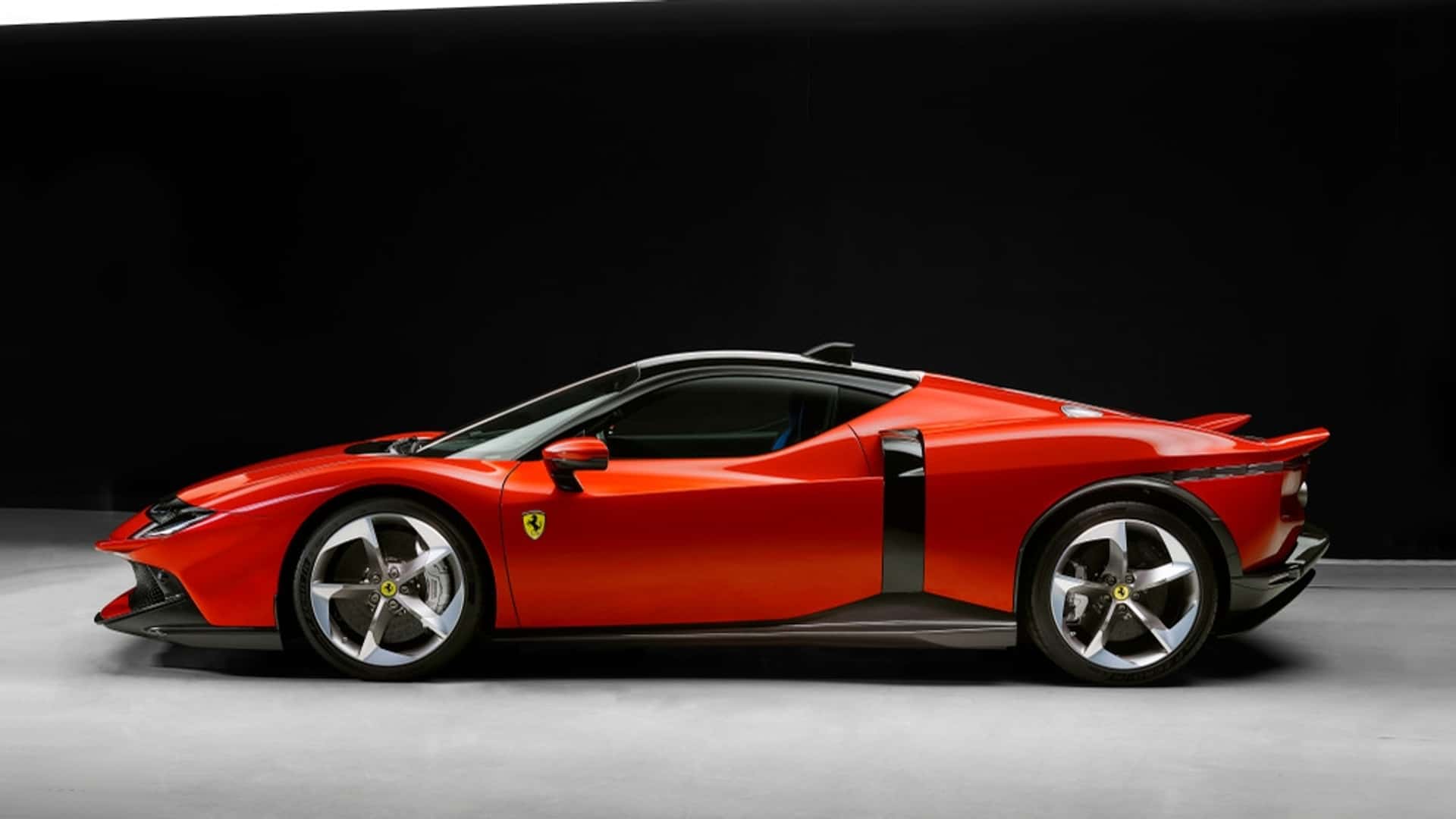
The Ferrari 849 Testarossa 2026
By Alaa Halabi
The Ferrari Testarossa: When '80s Excess Met Italian Engineering Perfection
There are cars that define their eras so completely that they become inseparable from the decade that birthed them. The Ferrari Testarossa is such a car a rolling embodiment of 1980s excess, confidence, and unapologetic drama that dominated bedroom posters, video game covers, and the collective automotive consciousness in ways that few machines before or since have achieved. The name alone conjures images: those iconic side strakes channeling air to massive radiators, the impossibly wide stance, the flat-twelve engine mounted behind the cabin, and the red cam covers that gave the car its "redhead" name.
Yet dismissing the Testarossa as merely a period piece, a nostalgia object for middle-aged men reliving their teenage fantasies, misses what made this Ferrari genuinely special beyond its cultural impact. Underneath the Miami Vice aesthetics and Wall Street symbolism lived a seriously engineered supercar that pushed technical boundaries, solved genuine packaging challenges, and delivered performance that remained impressive decades after production ended. Understanding the Testarossa requires looking past the cultural baggage it accumulated and examining what Ferrari actually created when tasked with building a more practical, more civilized successor to the legendary but compromised Berlinetta Boxer.
The Context: Why Ferrari Needed the Testarossa
The Testarossa didn't emerge from vacuum but rather from specific challenges Ferrari faced in the early 1980s with their existing mid-engine flagship. The 512 BB (Berlinetta Boxer), while beautiful and fast, suffered from heat management issues that made the cabin uncomfortably hot, cooling inadequacies that caused overheating in traffic or hot climates, and packaging constraints that limited luggage space to nearly nothing. Ferrari needed a car that addressed these practical shortcomings while maintaining the performance and prestige that the flagship model demanded.
The engineering challenge was substantial: how do you improve cooling without compromising aerodynamics? How do you create more luggage space in a mid-engine layout? How do you make the cabin more livable without sacrificing the exotic character that customers expected? Pininfarina, Ferrari's longtime design partner, worked with Ferrari's engineers to develop solutions that were as dramatic visually as they were effective functionally.
The side strakes, perhaps the Testarossa's most distinctive visual element, weren't styling affectations but functional cooling solutions. The wide body pushed the side radiators outboard from the engine, and the strakes channeled air from intakes near the doors rearward to these radiators. This moved cooling duty away from front-mounted radiators, freeing space for luggage and reducing heat transfer to the cabin. The solution was elegant engineering wrapped in attention-demanding aesthetics—function and form unified in ways that epitomized Ferrari's approach at its best.
The flat-twelve engine choice maintained Ferrari's tradition despite the configuration's complexity and width. The 180-degree V12 (functionally a flat-twelve) allowed a lower hood line and better weight distribution than a traditional V12, though it created its own challenges with width and cooling demands. At 4.9 liters producing 390 horsepower, the engine delivered performance that placed the Testarossa among the world's fastest cars while maintaining the multi-cylinder sophistication and sound that defined Ferrari's character.
The Design: Pininfarina's Most Controversial Masterpiece
Leonardo Fioravanti at Pininfarina led the Testarossa's design, creating something that was immediately controversial and ultimately iconic. The proportions were extreme: 1,976mm wide (wider than many modern SUVs), yet only 1,130mm tall, creating a stance that was impossibly low and dramatically wide. The 2,550mm wheelbase was substantial, contributing to stability but also making the car genuinely large in ways that earlier mid-engine Ferraris weren't.
The side strakes numbered nearly a dozen per side, running from the door back to the rear wheel arch in parallel lines that created visual drama while serving their functional cooling purpose. Critics initially dismissed them as excessive, but time has vindicated the design—the strakes are now among the most recognizable automotive design elements ever created, instantly identifying a Testarossa from any angle or distance.
The rear end featured distinctive taillights that wrapped around the corners, wide enough that the license plate was offset to one side rather than centered. The single high-mounted mirror on the driver's side (a regulatory requirement in some markets led to dual mirrors in others) added to the asymmetric character. The pop-up headlights were necessary for aerodynamics and regulations but dated the design as '80s technology advanced past this solution.
The interior was classic Ferrari of the era: leather everywhere, analog gauges clustered in front of the driver, a gated manual transmission shifter sitting proudly in the center console, and build quality that was acceptable rather than exceptional by the luxury standards that customers paying six-figure prices might expect. The ergonomics were challenging—the wide body meant long reaches to certain controls, the visibility was compromised by the low seating position and wide body, and the switchgear felt more parts-bin than bespoke. But the atmosphere was unmistakably Ferrari, and the driving position put you in proper sports car territory rather than the upright positions that were beginning to define even exotic cars as comfort became prioritized.
The later 512 TR and F512 M revisions addressed some criticisms—the 512 TR cleaned up the engine bay appearance, revised the rear suspension, and updated details throughout. The F512 M went further with front-end revisions that replaced the pop-up headlights with exposed units, revised the engine for more power (440 horsepower), and incorporated final refinements that represented the ultimate evolution of the platform. But neither revision changed the fundamental character—they remained Testarossas with improvements rather than transformations.
The Performance: Speed Wrapped in Civility
The Testarossa's performance specifications impressed even by contemporary supercar standards. The 4.9-liter flat-twelve produced 390 horsepower at 6,300 rpm and 361 lb-ft of torque at 4,500 rpm—figures that don't overwhelm by modern standards but represented serious output for a naturally aspirated engine in the mid-1980s. The power fed through a five-speed manual transmission to the rear wheels, the only configuration Ferrari offered (no automatic option existed, nor would customers have wanted one).
Zero to 100 km/h required approximately 5.2 seconds, genuinely quick for the era though falling behind some contemporaries like the Porsche 959 or Lamborghini Countach. The top speed approached 290 km/h, making the Testarossa among the world's fastest production cars. More impressive than the ultimate figures was how the car delivered this performance—the flat-twelve pulled smoothly from low revs, built power progressively toward the 7,000 rpm redline, and sounded glorious throughout the range in ways that turbocharged competitors couldn't match.
The handling was sophisticated for a car this size and weight. The rear weight bias (41/59 front-to-rear distribution) required respect and skill to exploit fully, but the long wheelbase provided stability that made the Testarossa less intimidating than its contemporaries. The wide track contributed to impressive grip levels, and the revised suspension geometry (particularly in the 512 TR version) improved turn-in response and reduced the trailing throttle oversteer that earlier cars exhibited. This wasn't a car that forgave mistakes or tolerated ham-fisted inputs, but it was more manageable and less actively dangerous than the Countach or F40.
The braking was adequate but not exceptional, with fade during repeated hard stops from high speeds demonstrating that even Ferrari struggled with heat management in the massive braking systems required to slow 1,500+ kilogram cars from nearly 300 km/h. The later revisions improved brake performance, but stopping remained less impressive than acceleration throughout the model's run.
The fuel consumption was exactly what you'd expect from a 4.9-liter twelve-cylinder engine: appalling by any rational standard, perhaps 15-18 liters per 100 kilometers in mixed driving and worse if you actually used the performance. The fuel tank held approximately 110 liters, providing reasonable range despite the consumption, but filling it required substantial investment every time the needle approached empty.
The Ownership Reality: Daily Exotic or Garage Queen?
Ferrari positioned the Testarossa as more usable and civilized than the Berlinetta Boxer, and by that standard they succeeded. The cooling improvements eliminated the extreme cabin heat that made the BB nearly unbearable in traffic. The additional luggage space (while still modest by sedan standards) meant you could actually pack for weekend trips rather than carrying only what fit in the footwell. The improved visibility through larger glass areas and better mirror placement made parking and maneuvering less terrifying. These improvements transformed the car from purely weekend exotic to something you could conceivably use more regularly if you were willing to accept the compromises that mid-engine supercars inherently demand.
The reliability was typical Ferrari of the era: generally good if maintained properly and regularly, expensive and frustrating when things went wrong. The flat-twelve engine required timing belt services at prescribed intervals (30,000 kilometers or five years, whichever came first), and these services demanded extensive labor as the engine had to be dropped from the car to access the belts. The cost for major service could easily reach 5,000-8,000 USD or more depending on what else was addressed during the engine-out service intervals. Skipping or delaying these services risked catastrophic engine damage if belts failed, creating expensive consequences that exceeded service costs by orders of magnitude.
The clutch was heavy by modern standards, making traffic driving a genuine physical workout. The fuel consumption meant range anxiety existed even with the large tank if you drove spiritedly in areas with sparse fuel station coverage. The width created parking challenges—the Testarossa literally didn't fit in some European parking garages designed for narrower vehicles, and maneuvering in tight spaces demanded attention and sometimes required accepting that you simply couldn't go where narrower cars could.
The climate control worked adequately once moving but struggled in traffic or when parked, meaning hot day operations required tolerance for discomfort or simply avoiding situations where you'd be idling for extended periods. The noise levels were substantial at highway speeds, with wind noise from the large mirrors and mechanical noise from the engine behind your head making conversation difficult and long journeys fatiguing.
Yet for all these compromises, Testarossa ownership delivered experiences that no amount of modern refinement can replicate. The flat-twelve sound at 7,000 rpm is addictive, a mechanical symphony that makes every acceleration run an event. The drama of piloting something this wide and low, with the visibility challenges and the attention it commands everywhere it goes, creates memories that rational analysis cannot capture. The connection to an era when supercars were genuinely exotic and uncomfortable rather than daily-usable with launch control and dual-clutch transmissions gives the experience a purity that modern cars, for all their objective superiority, cannot match.
The Cultural Impact: More Than Just a Car
The Testarossa transcended automotive enthusiasm to become cultural icon in ways that few cars achieve. The timing was perfect—the car launched in 1984, hitting peak production and visibility during the excess and optimism of the mid-to-late 1980s when displaying wealth wasn't just acceptable but celebrated, and when angular, dramatic design was the aesthetic language across fashion, architecture, and consumer products.
The Miami Vice connection cemented the Testarossa in popular consciousness. The white Testarossa driven by Don Johnson's character Sonny Crockett became almost as important to the show's visual identity as the pastel suits and the Ray-Ban Wayfarers. Ferrari actually provided the cars for the show (replacing an earlier Ferrari Daytona Spyder replica that Ferrari objected to), creating perfect synergy between the show's glamorous escapism and Ferrari's brand positioning.
The video game appearances were equally important for younger enthusiasts who couldn't afford the $180,000+ price tags. OutRun, the legendary Sega arcade racing game, featured a Testarossa (or a car suspiciously resembling one) as the hero vehicle, introducing the car to millions who would never see one in person. The Testarossa became fantasy object, the poster car that represented success, speed, and the exotic life that seemed achievable during the optimistic '80s.
The Wall Street connection was inevitable—the Testarossa became the car that traders, investment bankers, and newly wealthy entrepreneurs bought to signal their arrival. The car's proportions and drama matched the decade's aesthetic perfectly, and the price tag ($181,000 in 1986, approximately $480,000 in 2026 dollars) positioned it as genuinely expensive but attainable for the high-flying financial types rather than being reserved only for royalty and titans of industry like some limited-production hypercars.
The Market Today: Investment Grade Classic
The Testarossa market has matured through distinct phases that mirror classic car market cycles. Initially, values depreciated as newer, faster Ferraris made the Testarossa seem dated and slower than modern alternatives. By the 2000s, clean examples could be found for $60,000-90,000—substantial money but far below original retail and representing genuine depreciation rather than investment appreciation.
The 2010s brought renewed appreciation as '80s nostalgia intensified and younger collectors who'd grown up with Testarossa posters entered the market with purchasing power. Values began climbing, first slowly then more rapidly as clean, low-mileage examples became recognized as genuinely scarce. By 2020, excellent condition Testarossas were commanding $150,000-200,000, exceeding original retail prices and reflecting genuine collector demand.
In 2026, the market has stratified clearly. The most desirable examples—low mileage, excellent service history, original paint and interior, early production "monospecchio" single-mirror cars or late-production F512 M models—command $200,000-300,000 or more for exceptional specimens. Standard mid-production cars in good condition trade in the $150,000-180,000 range. Higher mileage examples with deferred maintenance or cosmetic needs can still be found under $100,000, but prospective buyers must understand that addressing deferred maintenance on neglected Testarossas can easily exceed the purchase price.
The 512 TR and particularly the F512 M command premiums over base Testarossas, reflecting their improved engineering and relative scarcity (the F512 M produced only 501 examples versus approximately 7,200 base Testarossas). The F512 M represents the final evolution of the platform and is increasingly recognized as the most desirable variant despite lacking the pure iconic status of the original Testarossa design.
The investment case for Testarossas is reasonable if not spectacular. The car is genuinely iconic with cultural significance that transcends mere automotive enthusiasm. The production numbers were substantial enough that examples exist but limited enough that they're not common. The '80s nostalgia wave shows no signs of ending as the generation that grew up during that decade enters peak earning years. However, the maintenance costs and driving limitations mean these are toys for the wealthy rather than practical vehicles, limiting the potential buyer pool and creating ceiling on how high values can reasonably climb.
The Verdict: Flawed Icon That Earned Its Status
The Ferrari Testarossa is not the best Ferrari ever built—that distinction belongs to the F40, the 250 GTO, or various other models depending on your criteria. It's not the fastest Ferrari of its era—the F40 demolished it in straight-line performance and track capability. It's not the prettiest Ferrari—the 250 series, the Daytona, and various other models make stronger aesthetic cases. It's not the most innovative Ferrari—the F40's advanced composite construction or the 288 GTO's racing technology exceed the Testarossa's engineering adventurousness.
What the Testarossa is, however, is the Ferrari that most completely captured its moment and translated that moment into enduring icon status. The design drama, the flat-twelve soundtrack, the '80s excess it embodied, and the practical improvements it delivered over the Berlinetta Boxer combined to create something that succeeded both as engineering exercise and as cultural statement. Ferrari sold over 7,000 Testarossas across all variants, making it genuinely successful by supercar standards where hundreds rather than thousands typically represent good sales.
For collectors in 2026, the Testarossa represents different proposition than it did as new car in 1986 or used car in 2006. It's now recognized classic that commands serious money and requires serious commitment to maintain properly. The driving experience is compromised by modern standards—the heavy controls, the width, the visibility challenges, the noise, and the sheer effort required to drive it spiritedly all contrast sharply with modern supercars that deliver more performance with less drama and difficulty.
But that's precisely the appeal for the right buyer. The Testarossa demands engagement in ways modern cars don't. There's no launch control, no dual-clutch transmission executing perfect shifts in milliseconds, no stability control catching mistakes before they become dangerous. It's you, a manual transmission, 390 horsepower, and consequences for getting it wrong. The flat-twelve behind your head howls to 7,000 rpm producing a sound that no turbocharged V8 or hybrid system can replicate. The width and drama create constant awareness that you're piloting something special rather than just another fast car.
In Dubai's context, where exotic cars are common enough to fade into background noise, a Testarossa stands out through sheer anachronistic presence. It's not trying to be the fastest or most modern. It's not competing with current Ferraris or Lamborghinis that objectively outperform it in every measurable way. It's simply being itself—a product of specific era executed with commitment to that era's aesthetic and engineering priorities. For enthusiasts who appreciate automotive history and want to experience supercars before they became civilized and approachable, the Testarossa delivers authenticity that no amount of modern reinterpretation can capture.
The Ferrari Testarossa earned its icon status not through being perfect but through being perfectly itself: dramatic, excessive, uncompromising, and unmistakably a product of the decade that created it. Three decades after production ended, it remains instantly recognizable, genuinely desirable, and appropriately valued as the rolling embodiment of an era when optimism, wealth, and automotive excess converged to create machines that prioritized drama over convenience and made no apologies for demanding commitment from their owners.
For those who understand what it represents and accept what it demands, the Testarossa is not a flawed icon but an icon precisely because of its specific combination of strengths and limitations that define it so completely. It's a car that could only have been created in the 1980s, and it's a car that remains worth experiencing, preserving, and celebrating as automotive history that's as important culturally as it is mechanically.