


JOURNAL
What Ferrari Might Make in the Next Few Years
By Alaa Halabi
What Ferrari Might Make in the Next Few Years: Reading the Prancing Horse's Future
Ferrari occupies unique position in the automotive industry. While other manufacturers chase volume, market share, and mass-market accessibility, Ferrari deliberately limits production to maintain exclusivity, commands premium pricing that defies conventional economic logic, and answers to shareholders while somehow maintaining the mystique and desirability that makes the brand special. Understanding what Ferrari might build in the coming years requires examining not just technology trends or regulatory pressures, but rather how Ferrari balances its heritage as the world's preeminent super car manufacturer with the realities of electrification mandates, changing customer expectations, and the need to evolve without alienating the purists who've sustained the brand through decades.
The challenge Ferrari faces is more complex than simply building faster cars or adopting new power trains. It's about maintaining the essential Ferrari character—the screaming engines, the driver engagement, the emotional connection—while incorporating technologies that seem fundamentally opposed to what makes a Ferrari special. How do you electrify without losing soul? How do you embrace hybrid technology without becoming just another fast car rather than a Ferrari? How do you expand the model range to meet business objectives without diluting the exclusivity that justifies the pricing? These questions will define Ferrari's product strategy through 2030 and beyond.
The Immediate Future: What We Know Is Coming (2026-2027)
Ferrari doesn't announce products years in advance like mainstream manufacturers, but company communications, regulatory filings, and strategic statements provide roadmap for near-term introductions. Several models are essentially confirmed for 2026-2027 release.
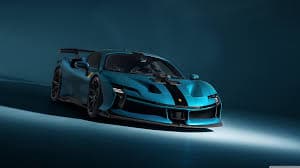
The F250 (Working Name) - SF90 Successor: Ferrari's flagship hybrid supercar, the SF90 Stradale, launched in 2019 and will require replacement by 2026-2027 to maintain Ferrari's typical product cycles. The successor will almost certainly increase electrification, likely featuring larger battery capacity enabling 40-50 kilometers of electric-only range (up from SF90's 25 kilometers), more powerful electric motors increasing total system output beyond 1,000 horsepower, and potentially all-wheel-drive enhancement through more sophisticated torque vectoring.
The combustion engine will likely remain a V8, as Ferrari has committed to V8 and V12 engines continuing through the decade despite electrification. The configuration might evolve—perhaps moving to a V6 hybrid setup similar to what competitors are exploring, or maintaining the V8 but with increased electrification compensating for any displacement reduction. The key is that Ferrari won't abandon combustion engines for pure electric powertrains in this segment yet, as the SF90 successor must maintain the engine sound and character that define Ferrari's appeal.
The 12 Cilindri Evolution: Ferrari's naturally aspirated V12 grand tourers represent the brand's purest expression, but regulations increasingly threaten this configuration. The 812 Superfast and its variants represented potentially the final naturally aspirated V12 in Ferrari's lineup, but Ferrari has repeatedly stated commitment to preserving the V12 through the decade. The solution will likely involve electrification—a V12 hybrid combining Ferrari's traditional twelve-cylinder engine with electric motor assistance.
This isn't compromise but evolution. The electric motors will fill torque gaps, provide instant response, and enable brief electric-only operation for noise-restricted zones while maintaining the V12 soundtrack and character that define these models. The total system output will likely exceed 850-900 horsepower, making these the most powerful front-engine V12 Ferraris ever produced. The electrification satisfies regulators while enhancing rather than compromising the driving experience.
The Purosangue Evolution: Ferrari's SUV generated controversy among purists but commercial success that justifies continued investment. The Purosangue currently uses a naturally aspirated V12, making it perhaps the world's only V12 SUV in current production. The next evolution will likely embrace electrification, potentially becoming Ferrari's first plug-in hybrid SUV with meaningful electric range for daily commuting while maintaining V12 power for performance driving.
Alternative approach might involve downsizing to V8 hybrid configuration, though this risks alienating customers who chose Purosangue specifically for the twelve-cylinder exclusivity. Ferrari's strategic dilemma is whether to maintain the V12 to differentiate from Lamborghini's Urus and other luxury performance SUVs, or embrace more practical electrified V8 powertrains that deliver better efficiency and potentially superior performance through electric torque fill.
Mid-Engine V6 Hybrid Introduction: Ferrari has confirmed development of new V6 engine, representing the first time Ferrari has offered six-cylinder engine since the Dino models of the 1960s-70s. This engine will likely power an entry-level (by Ferrari standards) mid-engine model positioned below the current Roma and potentially replacing it, or creating new segment between the Roma and the F8 Tributo successor.
The V6 will be heavily electrified with hybrid assistance that brings total system output to 650-700+ horsepower—more than sufficient for supercar performance while delivering efficiency that satisfies regulations. The sound will be critical challenge: a six-cylinder engine, regardless of configuration or exhaust tuning, cannot replicate the aural characteristics of V8 or V12 engines. Ferrari's engineers must create soundtrack that's distinctly Ferrari despite the cylinder count reduction, likely through exhaust tuning, acoustic enhancement, and perhaps strategic use of speakers to augment rather than replace mechanical sound.
The Mid-Term Strategy: Electrification Without Losing Soul (2027-2029)
Beyond the immediate product introductions, Ferrari's mid-term strategy involves deeper electrification while maintaining combustion engines across the range. This period represents the critical transition where Ferrari must prove electrification enhances rather than compromises what makes their cars special.
The First Pure Electric Ferrari: Ferrari has confirmed that their first pure electric vehicle will launch by 2025-2026, representing momentous shift for a brand defined by engine sound and combustion drama. The speculation about this vehicle is intense: will it be a GT model, a supercar, an SUV, or something entirely new?
The most likely scenario is a four-door GT positioned as electric alternative to the Roma or Purosangue, targeting customers who want Ferrari exclusivity and performance but require or prefer pure electric operation. This positions the EV as complementary to combustion models rather than replacing them, acknowledging that different customers have different priorities and use cases.
The performance specifications will be exceptional—Ferrari won't release an EV that's merely adequate. Expect 800+ horsepower, 0-100 km/h in under 3 seconds, and handling dynamics that justify the Ferrari badge through sophisticated chassis engineering and weight management that compensates for battery mass. The challenge isn't making it fast; modern EV technology makes speed easy. The challenge is making it feel like a Ferrari when the defining characteristic of Ferrari (engine sound and character) is absent.
Ferrari might address this through exaggerated other characteristics: the most aggressive handling dynamics in the EV segment, tactile steering feedback that communicates more than competitors, brake feel that mimics traditional hydraulic systems rather than regenerative blending, and interior atmosphere that's unmistakably Ferrari even without engine soundtracks. The EV must succeed on its own terms rather than as pale imitation of combustion Ferraris, offering something distinctly valuable that combustion engines cannot deliver while maintaining Ferrari's quality, exclusivity, and emotional impact.
Range-Wide Hybridization: By 2028-2029, expect every Ferrari model to incorporate some level of electrification. This doesn't mean every Ferrari will be plug-in hybrid, but even models maintaining traditional powertrains will likely add mild-hybrid systems providing torque fill, energy recovery, and efficiency improvements that satisfy increasingly stringent regulations.
The mild-hybrid approach uses 48-volt electrical systems and small motor-generators to assist the combustion engine, capture braking energy, and enable brief electric-only operation at very low speeds. This technology is relatively simple, adds minimal weight compared to plug-in hybrid systems, and provides meaningful efficiency improvements without fundamentally changing the driving experience. For Ferrari, mild-hybrid serves as bridge technology allowing combustion engines to continue while satisfying regulatory requirements through efficiency improvements rather than pure electrification.
Special Edition Naturally Aspirated Swansongs: As electrification becomes mandatory across the range, Ferrari will likely create limited-edition models celebrating naturally aspirated engines before they disappear entirely. Think of these as modern equivalents to the 458 Speciale or 812 Competizione—ultimate expressions of specific powertrains before regulation or strategy forces their retirement.
These special editions will command premium pricing, sell out immediately to collectors, and appreciate rapidly as final examples of technologies that defined Ferrari for decades. A final naturally aspirated V12, a last V8 without turbochargers or hybrid assistance, or ultimate iterations of current powertrains refined to absolute peaks—these will become instant classics and investment-grade collectibles precisely because they represent endings rather than new beginnings.
The Long-Term Vision: Ferrari Beyond 2030
Looking past 2030 requires more speculation as technology and regulations evolve unpredictably, but Ferrari's strategic statements and industry trends suggest likely directions.
Synthetic Fuels as Combustion Lifeline: Ferrari has shown strong interest in synthetic fuels (e-fuels) that could allow combustion engines to continue beyond electric transition by using carbon-neutral fuels that don't contribute to atmospheric CO2 increase. If synthetic fuel production scales and costs decrease sufficiently, Ferrari might maintain combustion engines far longer than current predictions suggest, powered by fuels that satisfy climate concerns while preserving the engine sounds and characteristics that define the brand.
This would be ideal outcome for Ferrari enthusiasts—maintaining traditional powertrains and driving experiences while addressing environmental concerns through fuel chemistry rather than propulsion technology. However, synthetic fuel viability depends on factors beyond Ferrari's control including production scaling, cost reduction, and regulatory acceptance in key markets. Ferrari is hedging by developing electric capability while hoping synthetic fuels provide alternative path forward.
Limited Production Combustion Models: Even if regulations prohibit mass-market combustion engines, Ferrari might maintain extremely limited production combustion models for markets where regulations allow or through special exemptions for low-volume manufacturers. This would create two-tier product range: mainstream electrified models available globally, and ultra-limited combustion models for markets and customers willing to pay premiums for traditional powertrains.
This approach has precedent—various manufacturers produce special models in limited numbers that receive regulatory exceptions based on production volume. Ferrari's deliberately limited production positions them advantageously for such strategies, potentially allowing combustion engines to continue in some form even after mainstream adoption becomes impossible.
Autonomous Technology: Never: While other manufacturers race toward autonomous driving, Ferrari has stated clearly that they will never produce autonomous vehicles. A Ferrari exists to be driven, and removing that driver engagement would eliminate the core purpose. This might seem like obvious statement, but it's strategically significant as the industry increasingly assumes autonomous capability is inevitable across all segments.
Ferrari's rejection of autonomy maintains focus on driving purity and driver engagement rather than dividing development resources between contradictory goals. This commitment suggests that even as powertrains electrify and technologies evolve, Ferrari will maintain driver-focused character rather than becoming transportation appliances regardless of how fast or luxurious.
The Hyper-Luxury Positioning Intensifies: Ferrari will continue limiting production, increasing prices, and positioning even more aggressively in ultra-luxury territory where exclusivity matters more than volume. The Purosangue demonstrates this strategy—priced at $400,000+ and deliberately limited to prevent market saturation, the SUV targets customers for whom price is nearly irrelevant but exclusivity is paramount.
Future Ferrari models will likely push pricing even higher while maintaining or reducing production volumes. This creates virtuous cycle where scarcity increases desirability, justifying premium pricing that further enhances exclusivity. The strategy works only because Ferrari has cultivated brand strength where customers accept artificial scarcity and premium pricing as part of the ownership experience rather than as cynical profit maximization.
The Technology Wildcard: What Might Surprise Us
Ferrari's conservative approach to adopting new technology doesn't preclude genuine innovation when developments align with their priorities. Several technologies might appear in future Ferraris despite not being mainstream today.
Advanced Aerodynamics: Ferrari has explored active aerodynamics extensively, and future models will likely feature increasingly sophisticated systems that adjust in real-time based on speed, braking, cornering forces, and driving modes. This extends beyond simple rear wings to include active underbody panels, adjustable front splitters, and potentially morphing surfaces that optimize aerodynamics continuously rather than through preset positions.
Materials Science Advances: Carbon fiber has dominated supercar construction for decades, but new materials including carbon nanotube composites, advanced aluminum alloys, and potentially graphene-enhanced composites could enable lighter structures with better strength characteristics. Ferrari's limited production volumes allow using expensive materials that mass manufacturers cannot justify, creating potential competitive advantages through material science that offsets weight additions from electrification.
Solid-State Batteries: When solid-state battery technology matures (likely late 2020s or early 2030s), Ferrari will adopt it for their electric and hybrid models. The technology promises higher energy density, faster charging, improved safety, and longer lifespan—all critical for performance applications. Ferrari won't be first to adopt (they'll let others validate the technology), but they'll implement it quickly once proven, likely creating special editions that showcase solid-state advantages through performance improvements over previous battery chemistry.
AI-Enhanced Dynamic Systems: While Ferrari rejects autonomous driving, they embrace AI for optimizing vehicle dynamics, power delivery, and handling characteristics. Future Ferraris will likely use machine learning systems that adapt to driver behavior, road conditions, and performance objectives in real-time, creating more sophisticated version of current stability and traction control systems that enhance rather than limit driver capability.
The Dubai Context: What This Means for Regional Customers
Ferrari's future direction has specific implications for UAE and broader Middle East markets where brand has strong presence and loyal customer base.
The Heat Challenge: Dubai's extreme climate creates particular challenges for hybrid and electric Ferraris where battery thermal management consumes energy and reduces range. Future Ferrari hybrids and EVs will need robust thermal management specifically validated for Gulf conditions, likely requiring over-engineering cooling systems beyond what European or American markets demand. Ferrari's attention to regional requirements will determine whether their electrified models work well in UAE or merely work adequately with compromised performance during summer months.
The Infrastructure: UAE's charging infrastructure continues developing but remains inconsistent outside urban centers. Ferrari's plug-in hybrids and eventual pure EVs must deliver sufficient electric range and fast-charging capability that infrastructure limitations don't severely restrict usability. The Purosangue hybrid, for example, should provide 50+ kilometer electric range sufficient for urban driving while maintaining combustion capability for longer trips where charging infrastructure remains sparse.
The Collector Market: UAE hosts significant Ferrari collector community, and the shift toward electrification will intensify interest in final naturally aspirated models. The 812 Competizione, SF90, and future special editions celebrating combustion engines will become highly sought-after in regional market where climate allows year-round driving and where collectors appreciate technology that they suspect will become unavailable in future due to electrification and regulation.
The Rental Market: For Ferrari rental market in Dubai and broader UAE, the introduction of electric and hybrid models creates interesting dynamics. The hybrid Ferraris with their electric-only capabilities might enable quiet hotel departures and noise-restricted area access that pure combustion cars cannot provide. However, rental customers often specifically want the engine sound and drama that electrification partially mutes, creating tension between what technology enables and what customers actually desire from rental experience.
The Verdict: Evolution Guided by Heritage
Ferrari's future will be electric, hybrid, and different from their combustion past—this is inevitable given regulations and technology trajectories that even Ferrari cannot ignore. But the evolution will be guided by heritage and commitment to maintaining what makes Ferrari special even as the underlying technology transforms.
The next few years will bring V6 engines to Ferrari for first time in modern era, continuing expansion of hybrid technology across the range, the introduction of Ferrari's first pure electric vehicle, and likely the final naturally aspirated special editions celebrating combustion's last hurrah. By 2030, the majority of Ferraris sold will incorporate electrification in some form, but combustion engines will persist through that decade through hybrid configurations and potentially synthetic fuel adoption.
What won't change is Ferrari's commitment to driver engagement, emotional connection, and exclusive positioning that justifies premium pricing and artificial scarcity. The powertrains will evolve, the technologies will advance, but the fundamental Ferrari character—the focus on driving purity, the attention to detail, the refusal to compromise essential qualities for convenience or mass appeal—will persist because it must. Without these qualities, a Ferrari becomes merely another fast car rather than an object of desire that transcends rational automotive evaluation.
For enthusiasts who've grown up with screaming V12s and turbo V8s, the transition will be difficult. The engine sounds will change, the driving experiences will evolve, and some of what defined Ferrari will necessarily be left behind. But the alternative—refusing to evolve and becoming irrelevant as regulations prohibit traditional approaches—would end Ferrari far more definitively than electrification ever could.
Ferrari will navigate this transition because they must, but they'll do it on their own terms, at their own pace, and with unwavering commitment to maintaining the essential character that's sustained the brand through seven decades. The Ferraris of 2030 will be different from those of 2020, but they'll still be Ferraris in the ways that matter most. And that, ultimately, is what the prancing horse's loyal following hopes for as they watch their beloved brand evolve into uncertain future while carrying forward the heritage that made it legendary.