


JOURNAL
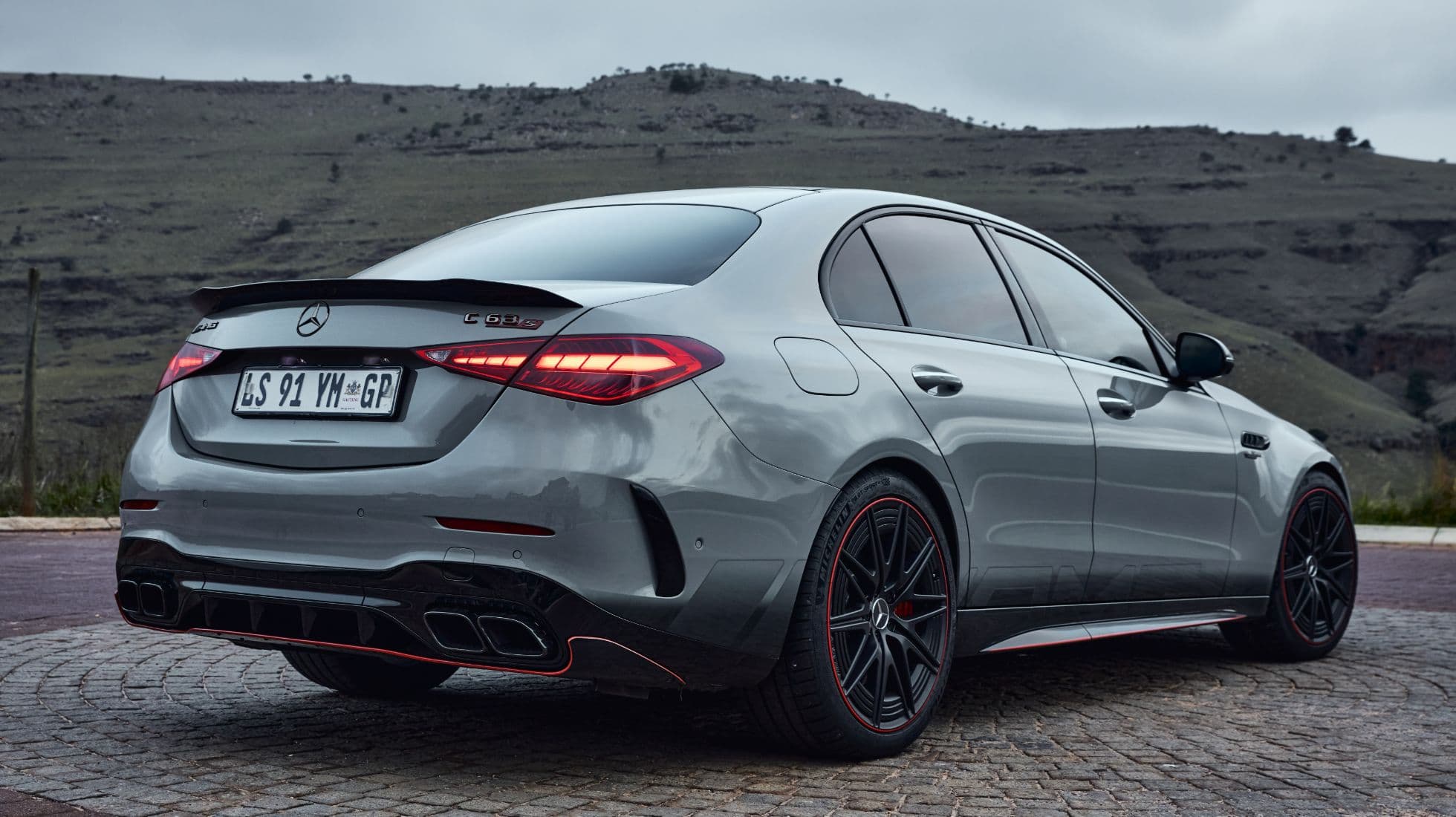
Is the Mercedes-AMG C63 S E Performance a Good Car?
By Alaa Halabi
Is the Mercedes-AMG C63 S E Performance a Good Car? The Question That Divides Enthusiasts
There are automotive questions that generate polite disagreement. Then there are questions that start arguments, fracture friendships, and expose fundamental philosophical divides about what makes a performance car worth owning. "Is the Mercedes-AMG C63 S E Performance a good car?" belongs firmly in the latter category. The answer depends less on objective measurement than on what you believe a C63 should be, what compromises you're willing to accept, and whether you value emotional connection or ultimate performance when the two come into conflict.
The controversy exists because Mercedes-AMG made a decision that shocked the automotive world: they replaced the C63's beloved twin-turbocharged 4.0-liter V8 with a turbocharged 2.0-liter four-cylinder paired with an electric motor and battery pack. On paper, the specifications improved dramatically. In practice, the character that made fifteen years of C63 models special vanished. Whether that trade-off represents progress or betrayal depends on perspective, priorities, and what you actually want from a vehicle wearing the C63 badge.
The Performance Case: Numbers Don't Lie
Let's address the objective facts first, because they're genuinely impressive and deserve recognition before we wade into the subjective debates that define this car's legacy. The C63 S E Performance produces 671 horsepower and 1,020 Nm of torque. Read those numbers again. A four-cylinder sedan, based on Mercedes' compact platform, delivers power figures that embarrassed supercars a decade ago. Zero to 100 kilometers per hour happens in approximately 3.4 seconds. The quarter-mile passes in under 11 seconds. Top speed is electronically limited to 250 kilometers per hour, or 280 with the optional AMG Driver's Package.
These aren't theoretical numbers extracted through careful testing under ideal conditions. This is real-world performance that any driver can access repeatedly without special skills or perfect conditions. The all-wheel-drive system, enhanced by the electric motor's ability to send torque to the rear axle instantaneously, provides traction that the previous rear-wheel-drive V8 models couldn't match. Launch control delivers brutal acceleration with minimal drama, the electronics managing wheelspin and weight transfer while you simply hold the throttle and steer.
The hybrid system's electric motor provides 201 horsepower and fills every gap in the power delivery. Turbo lag, that momentary hesitation between throttle application and boost pressure arrival, essentially disappears. The electric motor provides instant torque while the turbocharger spools, creating throttle response that feels naturally aspirated despite coming from a heavily boosted four-cylinder. The sensation is relentless forward momentum from any speed, in any gear, whenever you request it.
The handling benefits from sophisticated all-wheel-drive torque vectoring that can send power to individual wheels based on grip levels and driver input. The system enables cornering speeds that rear-wheel-drive predecessors couldn't approach, particularly in less-than-ideal conditions. The car rotates eagerly when you want it to, and plants power with confidence that inspires aggressive driving. The adaptive suspension manages the substantial weight effectively, providing control without harshness.
From a pure performance capability standpoint, the C63 S E Performance is the fastest, most capable C63 ever built. It accelerates harder, corners faster, and stops more effectively than any predecessor. If your measurement of "good" begins and ends with lap times and acceleration figures, the answer is clear: yes, this is objectively the best C63 Mercedes has ever produced.
The Emotional Case: What the Numbers Can't Measure
But cars aren't spreadsheets. Performance vehicles particularly exist to deliver experiences that transcend objective measurement. And this is where the C63 S E Performance encounters problems that no amount of horsepower can solve.
The sound is wrong. There's no diplomatic way to state this. A turbocharged four-cylinder producing 670 horsepower is an engineering marvel, but it sounds like a turbocharged four-cylinder. The exhaust note lacks the depth, the richness, the multi-layered complexity that eight cylinders provide. Mercedes pipes engine sound through the speakers to enhance what naturally exists, but artificial amplification cannot replicate authentic V8 character. The result is a car that sounds impressive for a four-cylinder but disappointing for a C63.
This matters more than specifications suggest. The C63's V8 soundtrack was integral to its identity. The rumble at idle, the bark during acceleration, the crackling overrun during deceleration all contributed to an emotional experience that justified the substantial premium over lesser Mercedes models. The E Performance's four-cylinder, despite producing more power, delivers less sensory satisfaction. You feel the speed, but you don't experience it with the same visceral intensity that made previous C63 models so addictive.
The weight is substantial. Adding a battery pack, electric motor, and associated cooling and control systems increased curb weight by approximately 250 kilograms compared to the previous-generation C63 S. The car now weighs around 2,250 kilograms, genuinely heavy for a vehicle based on Mercedes' compact platform. The sophisticated suspension and chassis engineering mask this weight impressively during aggressive driving, but it's noticeable during normal operation. The car feels substantial in ways that previous C63 models, despite their powerful engines, managed to avoid.
The complexity introduces concerns about long-term reliability and maintenance costs. The previous V8 C63 was mechanically sophisticated but conceptually straightforward: a powerful engine, a transmission, a differential, and supporting systems. The E Performance adds battery packs that will eventually degrade, electric motors that could fail, cooling systems for multiple powertrains, and software complexity that introduces additional failure points. Will these cars age gracefully like previous C63 models, or will they become expensive nightmares once warranties expire and components begin failing?
The character simply changed. Previous C63 models felt like sedans with supercar hearts transplanted into civilized bodies. The engines dominated the experience, providing constant reminders that something special sat under the hood. The E Performance feels more like a very fast electric car with a four-cylinder range extender. It's technically brilliant, but it lacks the personality that made people fall in love with C63s over the past fifteen years.
The Practical Considerations: Living With Complexity
The plug-in hybrid system adds capabilities that previous C63 models didn't offer, but it also introduces routines and limitations that affect daily ownership. The battery provides approximately 13 kWh of usable capacity, enabling roughly 13 kilometers of electric-only range under ideal conditions. This is sufficient for short trips to local destinations or perhaps a quiet morning departure without waking the neighborhood with exhaust noise.
But maximizing this capability requires regular charging. If you can charge at home or work, establishing the routine is straightforward. If you lack convenient charging access, the battery becomes dead weight that you're carrying around without benefit. The regenerative braking system recovers some energy during deceleration, but it cannot fully replenish the battery during normal driving. To truly benefit from the hybrid system's efficiency potential, you must plug in regularly.
The fuel economy improves compared to the previous V8 when driven conservatively and charged regularly. But drive the car with any aggression, and the fuel consumption becomes substantial as the 2.0-liter engine works hard to produce 469 horsepower while also charging the battery and powering the vehicle. The combined cycle economy figures that look impressive on paper require disciplined driving that most C63 buyers won't maintain consistently.
The interior remains typical AMG quality: excellent materials, supportive seats, comprehensive technology integration. The digital displays provide information about energy flow, battery charge level, and hybrid system operation. The driving mode selector includes settings for electric-only operation, hybrid optimization, and maximum performance. The execution is polished and user-friendly, though some will find the hybrid-specific displays and controls unnecessary complexity compared to the simpler interfaces in previous models.
Cargo space suffers minimally despite the battery pack, with Mercedes engineering the packaging carefully to maintain practicality. Rear seat room remains generous for a performance sedan. The trunk accommodates luggage for weekend trips or airport runs without compromise. From a pure utility standpoint, the E Performance functions as well as any C-Class, which is commendable given the performance hardware it contains.
The Market Reception: What Customers Actually Think
Sales data and customer feedback reveal mixed reception that validates both perspectives in the debate. Some customers appreciate the enhanced performance, advanced technology, and improved efficiency. They recognize the E Performance as the most capable C63 ever built and value what the hybrid system enables. These buyers tend to be newer to the AMG brand or prioritize specifications over character.
However, substantial numbers of traditional C63 customers rejected the E Performance entirely. Some purchased previous-generation V8 models before they disappeared from inventory. Others switched to competitors like BMW M3/M4 that maintained traditional inline-six power. Some simply waited, hoping Mercedes would reverse course and offer V8 options in future iterations. The loss of these loyal customers represents more than missed sales; it reflects damaged trust that takes years to rebuild.
The rental market provides additional insight. In Dubai's exotic car rental scene, demand for V8-powered AMG models consistently exceeds supply, while four-cylinder hybrid alternatives see less enthusiasm. Customers specifically request the engine configuration when booking, and many decline four-cylinder options even when performance specifications are explained. This preference pattern exists despite the E Performance's superior acceleration and handling capabilities.
Automotive journalists generally praise the E Performance's technical achievement while noting the character loss. Professional reviews consistently mention the impressive performance alongside disappointment about the sound and feel compared to predecessors. The consensus recognizes that Mercedes built an exceptionally fast sedan that happens to lack the soul that made previous C63 models special. Whether that trade-off is acceptable depends on individual priorities.
The used market will ultimately render the most honest judgment. Previous-generation C63 models with V8 engines hold value exceptionally well, with low-mileage examples sometimes appreciating rather than depreciating. Time will reveal whether E Performance models maintain similar value retention or suffer from hybrid system complexity and character compromises that reduce long-term desirability.
The Competition: How It Stacks Up
The BMW M3 and M4, the C63's traditional rivals, maintained inline-six power in their latest iterations. The S58 3.0-liter twin-turbo six produces 503 horsepower in Competition specification, substantially less than the C63's 671 horsepower. But BMW's engine delivers power with character and sound that many find more satisfying than the Mercedes four-cylinder. The M cars feel more connected, more engaging, more like traditional performance sedans despite giving away significant horsepower.
The Audi RS4 and RS5, while not quite direct competitors due to their different market positioning, offer alternative perspectives on performance sedans. Their turbocharged V6 engines split the difference between the BMW six and Mercedes four in character and output. They're fast without being fastest, engaging without being overwhelming, practical without being compromised.
Porsche doesn't directly compete in this segment, but customers cross-shopping performance sedans often consider the Panamera. It offers V8 power in upper trims, delivering the sound and character that the C63 lost. It's substantially more expensive and larger, but for customers who value traditional performance attributes, the premium might justify itself.
The comparison exposes the C63 E Performance's positioning challenge. It's fastest in a straight line but least engaging to drive enthusiastically. It's most technologically advanced but also most complex and potentially least reliable long-term. It offers capabilities competitors can't match but sacrifices character that defined what a C63 should be. The "best" choice depends entirely on which attributes you prioritize and which compromises you're willing to accept.
The Dubai Context: Where Character Still Matters
Dubai's automotive culture provides particularly clear illustration of the C63 E Performance's reception challenges. The market values visceral experiences, dramatic soundtracks, and emotional connections to vehicles. Performance specifications matter, but they're not sufficient without the complete sensory package that makes driving special.
The climate and infrastructure create ideal conditions for high-performance vehicles. The smooth highways connecting Dubai to destinations like Hatta and Jebel Jais reward the E Performance's exceptional acceleration and handling. The charging infrastructure at luxury properties supports plug-in hybrid operation. The customer base can easily afford the substantial purchase price and expected maintenance costs.
Yet the preference for V8-powered AMG alternatives remains strong. The G63 AMG continues commanding premium pricing and enthusiastic demand despite weighing substantially more and offering less sophisticated performance than the C63 E Performance. The older C63 and E63 models with V8 engines maintain strong appeal despite being technically inferior by every measurable standard.
This pattern suggests that Dubai's market, perhaps more clearly than others, demonstrates the importance of character and emotion in performance car appeal. The complete experience matters more than individual specifications. A slower car that sounds better, feels more engaging, and creates stronger emotional connections often proves more satisfying than a faster car that excels on paper but disappoints in practice.
For customers considering the C63 E Performance in Dubai, the decision requires honest assessment of priorities. If you value having the absolute fastest sedan and appreciate advanced technology, the E Performance delivers capabilities no competitor matches. If you value sound, character, and traditional performance car engagement, alternatives including older V8 models might provide greater satisfaction despite giving away performance advantages.
The Verdict: It Depends What You Value
So is the Mercedes-AMG C63 S E Performance a good car? The answer is both yes and no, depending entirely on your perspective and priorities.
Yes, it's good if you value:
- Absolute performance measured objectively
- Advanced technology and engineering sophistication
- All-weather capability and maximum traction
- Fuel efficiency relative to performance output
- Having the newest and most advanced iteration
No, it's not good if you value:
- Engine sound and auditory character
- Traditional performance car engagement
- Relative mechanical simplicity and predictable reliability
- Lighter weight and more agile feel
- Emotional connection and visceral satisfaction
The C63 S E Performance is an exceptional technical achievement that delivers performance capabilities previous C63 models couldn't approach. It's also a vehicle that abandoned the character and identity that made the C63 nameplate special to enthusiasts worldwide. Both statements are simultaneously true, and the tension between them defines the car's controversial legacy.
For some buyers, the enhanced performance justifies any character compromises. For others, the loss of V8 sound and traditional feel makes the car fundamentally not a real C63 regardless of how fast it accelerates. Neither perspective is wrong; they simply prioritize different attributes and reach different conclusions about acceptable trade-offs.
The broader lesson extends beyond this specific model. The automotive industry's transition toward electrification will create many more vehicles like the C63 E Performance: technically superior to predecessors but different in character and feel. Some customers will embrace these changes and appreciate what new technology enables. Others will resist and mourn what's lost in the transition. Manufacturers must navigate these divided audiences carefully, recognizing that forcing unwanted solutions rarely ends well regardless of how impressive the specifications appear.
If you're considering a C63 S E Performance, the decision ultimately requires honest self-assessment. Drive the car extensively in various conditions. Experience the acceleration, the handling, the technology integration. But also listen to the engine, feel the weight, consider the complexity. Compare it to alternatives including previous-generation V8 models if available. Then decide whether what the E Performance delivers matches what you actually want from a performance sedan, not what specifications suggest you should want.
The C63 S E Performance is good at being what it is: an exceptionally fast, technologically advanced plug-in hybrid performance sedan. Whether it's good at being what a C63 should be is a question that each potential buyer must answer personally, knowing that the automotive enthusiast community remains deeply divided on whether Mercedes made the right choices when they replaced eight cylinders with four and added batteries to the mix.
The debate continues, unlikely to reach consensus anytime soon. Perhaps that's fitting for a car that successfully combines contradictions: simultaneously the best and worst C63 ever made, depending entirely on how you measure success.