


JOURNAL
The Toyota GR GT
By Alaa Halabi
The Toyota GR GT: A Glimpse Into Toyota's Performance Future
Concept cars typically fall into two categories: pure fantasy exercises that will never see production, and thinly disguised previews of models arriving within eighteen months. The Toyota GR GT, unveiled at the 2022 Tokyo Auto Salon and later featured in Gran Turismo 7, occupies fascinating middle ground. This isn't vaporware destined to remain digital forever, nor is it a production-ready model waiting for press release timing. This is Toyota signaling intent, showcasing capability, and testing waters for what a halo performance car from Gazoo Racing could become.
For enthusiasts who watched Toyota revive the Supra, introduce the GR Corolla, and establish Gazoo Racing as a legitimate performance sub-brand, the GR GT represents the next logical evolution. This is where Toyota's racing expertise, hybrid technology leadership, and growing confidence in building driver-focused machines converge into a vision that's equal parts thrilling and believable.
Design Language: Emotion Over Convention
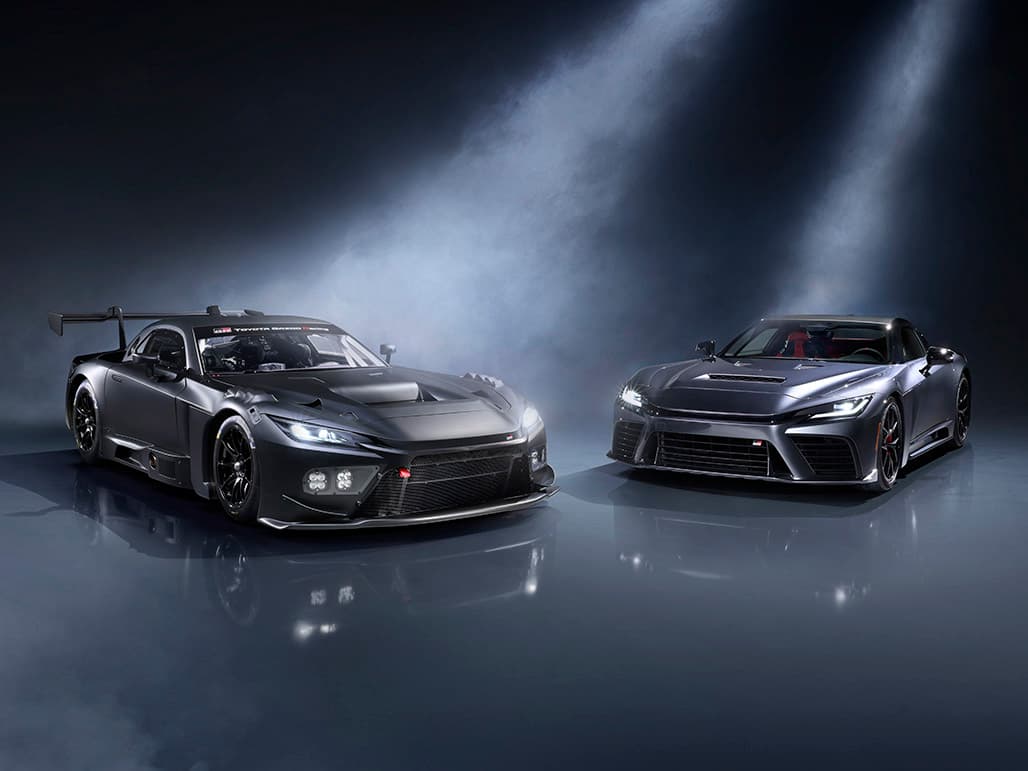
The GR GT's styling abandons Toyota's traditional conservatism entirely. This is a low-slung, wide-stance supercar that borrows visual cues from LMP1 endurance racing prototypes and modern hypercars without directly copying either. The front end features slim LED lighting integrated into aerodynamic channels that direct air around and through the body. The profile is wedge-shaped in classic mid-engine supercar tradition, but with muscular haunches and dramatic side air intakes that emphasize the car's performance intentions.
The greenhouse is minimal, reflecting the prioritization of aerodynamic efficiency over outward visibility. The rear design incorporates a full-width light bar and a massive active wing that adjusts position based on speed and driving mode. Large diffuser elements and quad exhaust outlets signal serious performance hardware beneath the carbon fiber skin. Every surface appears sculpted by airflow considerations rather than styling whims alone.
What's particularly interesting is how the GR GT manages to look unmistakably Toyota despite its exotic proportions. The family resemblance to other GR models exists in details like the lighting signature, the front grille treatment, and the overall philosophy of form following aerodynamic function. This isn't Toyota trying to copy Ferrari or Lamborghini. This is Toyota expressing its own vision of what a flagship performance car should communicate visually.
The proportions suggest mid-engine layout, which makes sense given the GR GT's intended positioning as a flagship sports car. The wheelbase appears relatively long for stability at high speeds, while the overhangs remain minimal for agility. The stance is wide and planted, communicating confidence even while stationary. If this design language carries through to production, Toyota will have created something that stands apart from European and American competitors while clearly belonging in their company.
Powertrain: Hybrid Performance Refined
Toyota hasn't released definitive specifications for the GR GT's powertrain, which is typical for concept vehicles. However, based on the brand's technological trajectory and statements from Gazoo Racing engineers, we can make educated assessments about what likely powers this vision.
The most probable configuration combines a high-revving V6 engine with electric motors in a performance-oriented hybrid setup. Think of it as Toyota's LMP1 racing technology adapted for road use, similar to how Ferrari, McLaren, and Porsche have leveraged their motorsport hybrid expertise for flagship models. The combustion engine would deliver high-output naturally aspirated character, while electric motors provide instant torque fill, all-wheel-drive capability through front axle motors, and regenerative braking for both efficiency and additional deceleration force.
Total system output likely targets somewhere between 800 and 1,000 horsepower, positioning the GR GT competitively against established supercar players without making unrealistic claims. The hybrid system would enable pure electric driving for short distances, not because anyone expects silent supercar commuting but because regulations increasingly demand this capability and because it enables dramatic performance demonstrations: silent launches followed by V6 fury as the combustion engine joins the party.
Battery placement would sit low in the chassis, similar to endurance racing prototypes, keeping the center of gravity close to the ground while also providing structural benefits. The electric motors at the front axle would enable torque vectoring, individually controlling power to each front wheel for improved corner entry and mid-corner adjustments. This technology has proven effective in Toyota's racing programs and would translate naturally to a road-going flagship.
The transmission would likely be a dual-clutch or advanced automatic rather than traditional manual, prioritizing shift speed and launch control capability over nostalgic engagement. While manual transmission advocates may lament this choice, modern supercar performance demands shifting speeds that manual transmissions simply cannot match.
Track-Focused Engineering
The GR GT's design suggests serious aerodynamic development beyond typical concept car styling exercises. The active rear wing, the front splitter elements, the side air channels, and the rear diffuser all indicate genuine attempts to generate downforce and manage airflow efficiently. If Toyota proceeds with production, expect wind tunnel validation and computational fluid dynamics optimization to refine these elements while maintaining the concept's aggressive visual character.
Chassis construction would almost certainly utilize carbon fiber monocoque architecture, similar to what established supercar manufacturers employ. Toyota has carbon fiber expertise from its LFA supercar program and ongoing motorsport involvement. A carbon tub provides the rigidity necessary for precise handling while keeping weight manageable despite the hybrid system's additional mass.
Suspension design would leverage knowledge from Toyota's endurance racing programs, where suspension must balance compliance for tire preservation with control for lap time performance. Adaptive dampers would be essential, allowing the GR GT to function on public roads without destroying occupants while also providing track-capable control when circumstances allow spirited driving.
Brake systems would necessarily be massive carbon ceramic units, the only technology capable of repeatedly handling deceleration from 300+ kilometers per hour speeds without fade. The hybrid system's regenerative braking would supplement mechanical braking while also recovering energy, but the physics of stopping a 1,500-kilogram vehicle from serious velocity demand serious brake hardware.
Interior Philosophy: Driver-Focused Minimalism
Concept car interiors often showcase extreme minimalism or technological overload. The glimpses we've seen of the GR GT's cabin suggest Toyota aims for middle ground: driver-focused simplicity enhanced by necessary modern technology. The steering wheel appears racing-inspired with integrated controls for driving modes and hybrid system management. The digital instrument cluster would provide customizable information displays tailored to track use or road driving.
Seats would almost certainly be fixed-back carbon fiber units in base specification, with adjustable pedal box to accommodate different driver sizes. This racing-derived approach saves weight while providing the lateral support necessary for high-cornering-force driving. Climate control, audio system, and other comfort features would be present but not emphasized, acknowledging that buyers of such vehicles prioritize performance over amenity.
The center console would house controls for suspension settings, powertrain modes, and traction intervention levels. Toyota's hybrid system adds complexity here, requiring driver interfaces for managing battery deployment strategy, regenerative braking aggressiveness, and electric-only driving when desired. Integrating these controls logically without overwhelming the driver represents a genuine design challenge that production versions must solve elegantly.
Material quality would reflect the car's positioning. Carbon fiber, aluminum, and Alcantara rather than wood and leather. The aesthetic would be technical and purposeful rather than luxurious in traditional terms. This aligns with Toyota's GR brand philosophy: these are serious driving machines first, status symbols second.
The Dubai Context: Future Possibilities
While the GR GT remains conceptual, its eventual production would create interesting positioning within Dubai's exotic car market. Toyota's brand perception in the region is strong but primarily associated with reliability and value rather than performance. The Supra helped shift this perception, but a true flagship supercar would complete the transformation, establishing Toyota as a legitimate player in the upper echelons of performance vehicle manufacturing.
Dubai's roads and climate would suit a hybrid supercar well. The electric driving capability would be useful for quiet hotel departures and parking structure maneuvering. The hybrid system's efficiency advantages would matter less given local fuel costs, but the performance benefits would be immediately apparent. The all-wheel-drive capability enabled by front electric motors would provide traction advantages during launches and in the occasional rain that catches drivers unprepared.
The GR GT's positioning would likely target buyers considering McLaren, Ferrari's entry-level models, or high-specification Porsche 911 Turbos. These customers appreciate performance engineering but aren't necessarily brand-loyal to European marques. Toyota's reputation for reliability could prove advantageous here. The concern with exotic cars often isn't capability but durability and ownership experience. If Toyota could deliver supercar performance with Lexus-like reliability and service quality, that combination would appeal strongly to pragmatic performance enthusiasts.
For rental scenarios, a production GR GT would occupy interesting territory. It wouldn't carry the immediate badge recognition of established supercar brands, requiring customer education about its capabilities and significance. However, for enthusiasts aware of Toyota's racing heritage and the GR brand's growing reputation, the opportunity to experience Toyota's flagship performance car would hold genuine appeal. The hybrid system's technology showcase factor would add another dimension to the experience.
Production Reality: When, Not If
Toyota has repeatedly stated that concepts showcased under the GR brand represent realistic production possibilities rather than pure fantasy. The GR GT's appearance in Gran Turismo 7 as a fully realized, drivable vehicle suggests Toyota invested significant resources in its development beyond typical concept car efforts. The question isn't whether a production version will arrive, but when and how closely it will resemble the concept.
Timeline predictions vary, but most industry observers expect a production GR GT sometime between 2026 and 2028. This allows Toyota to further develop the hybrid powertrain, validate the platform, and gauge market reception. The gap between concept and production also provides time to refine manufacturing processes and supply chain arrangements for what would be a low-volume, highly specialized vehicle.
Production numbers would likely be limited, perhaps 500 to 1,000 units annually. This maintains exclusivity while allowing Toyota to justify the development investment. Pricing would necessarily compete with established supercar manufacturers, probably landing between $300,000 and $500,000 depending on specification and market. This positions the GR GT above the Supra but below true hypercar territory, targeting customers seeking cutting-edge technology and performance without venturing into seven-figure territory.
Racing Heritage Realized
What makes the GR GT compelling isn't just its specifications or styling. It's what the car represents: Toyota's accumulated racing knowledge distilled into road-going form. The brand's Le Mans victories, World Rally Championship success, and ongoing motorsport involvement all feed into Gazoo Racing's philosophy. The GR GT would be the ultimate expression of that philosophy, a flagship that demonstrates what Toyota can achieve when performance is the primary objective rather than a secondary consideration.
This matters because modern Toyota faces perception challenges. The brand is respected but often seen as sensible rather than exciting. The GR GT has potential to shift that perception fundamentally, proving that Toyota can compete with anyone when building driver-focused performance machines. Success here would benefit the entire GR lineup, elevating brand cachet and attracting customers who might otherwise dismiss Toyota as merely practical.
The hybrid powertrain also positions Toyota advantageously for regulatory futures. As emissions standards tighten globally, pure combustion supercars face increasing challenges. Hybrid systems provide regulatory compliance while delivering performance benefits that pure combustion cannot match. Toyota's expertise in this area, developed through decades of hybrid vehicle production and racing application, gives them legitimate advantage over competitors still adapting to electrified performance.
The Enthusiast Perspective
For driving enthusiasts who remember the legendary 2000GT, the original Supra generations, and the LFA, the GR GT represents Toyota reclaiming its performance heritage. These weren't just fast Toyotas; these were genuinely exceptional vehicles that competed on merit with anyone. The GR GT promises similar achievement: not just a competent Toyota performance car, but a legitimate supercar that stands on its own regardless of badge.
The hybrid powertrain will divide purists who believe supercars must be naturally aspirated or at least purely combustion-powered. However, modern reality dictates that hybrid systems are inevitable, and Toyota's approach appears to prioritize performance benefits rather than merely satisfying regulatory requirements. If the GR GT drives as its specifications and racing heritage suggest, objections about powertrain configuration will diminish quickly once people experience what the technology enables.
What's perhaps most exciting is that Toyota is even attempting this. Building a flagship supercar requires enormous investment with uncertain return. The market is crowded, established players have loyal followings, and brand perception takes years to shift. Toyota's willingness to pursue this project anyway suggests genuine commitment to the GR brand's vision and confidence in their engineering capabilities.
Waiting for Reality
The Toyota GR GT remains conceptual, existing fully only in digital form within Gran Turismo 7 and as a static display at automotive events. But unlike many concept cars that generate excitement before fading into corporate archives, the GR GT feels inevitable. Toyota has the technology, the capability, the brand structure through Gazoo Racing, and apparently the will to make this happen.
When production begins, Dubai will undoubtedly see these vehicles on its roads. The city's embrace of automotive excellence, its infrastructure that accommodates high-performance driving, and its customer base that appreciates both cutting-edge technology and driving thrills make it perfect GR GT territory. Whether as private purchases or eventually rental opportunities, the GR GT would add another dimension to Dubai's already impressive automotive landscape.
The concept exists as promise and preview. The production reality will ultimately determine whether Toyota successfully joins the supercar elite or produces an interesting but flawed first attempt. Based on the brand's trajectory with other GR models, their motorsport success, and their technological capabilities, betting against them seems unwise.
The Toyota GR GT represents automotive future that feels both exciting and believable: hybrid performance done right, racing expertise applied to road cars, and a Japanese manufacturer refusing to cede supercar territory exclusively to European brands. When it arrives in production form, it won't just be another supercar. It will be validation that Toyota's performance renaissance is genuine and here to stay.
Until then, enthusiasts wait with interest tinged with impatience. The concept delivered the vision. Now comes the harder part: making that vision real, competitive, and worthy of the expectations it's generated. If any manufacturer has the discipline and capability to execute successfully, it's Toyota. The GR GT will prove whether that confidence is justified.