


JOURNAL
Renting a Car in Al Ain
By Alaa Halabi
Renting a Car in Al Ain: Exploring the UAE's Garden City and Desert Gateway
Renting a car in Al Ain is possible, we deliver the car and collect for a fee of 700 AED. Al Ain occupies a unique position in the UAE's geographic and cultural landscape. Known as the "Garden City" for its abundant greenery and commitment to preserving oasis agriculture in one of the world's harshest desert environments, Al Ain represents the UAE's heritage and traditional roots in ways that Dubai and Abu Dhabi's modernity cannot. This is the birthplace of Sheikh Zayed bin Sultan Al Nahyan, the UAE's founding father, and the city maintains this connection through meticulous preservation of historical sites, traditional architecture, and cultural practices that define Emirati identity beyond oil wealth and glass towers.
For visitors to Al Ain, whether drawn by history, UNESCO World Heritage sites, natural beauty, or simply curiosity about the UAE beyond its famous coastal cities, car rental transitions from convenience to absolute necessity. Al Ain sprawls across vast desert territory with attractions separated by distances that make taxis prohibitively expensive and public transportation functionally useless for tourist purposes. The city's layout, designed for cars rather than pedestrians in an era when fuel costs were irrelevant and shade was survival necessity, creates environment where walking between destinations is impractical even if distances appeared manageable on maps. The rental car becomes not just transportation but the enabler of the entire Al Ain experience.
Why Al Ain Is Different: Geography, Climate, and Rental Implications
Al Ain sits approximately 160 kilometers inland from Abu Dhabi and Dubai, positioned near the border with Oman in the eastern desert. This location creates several factors that distinguish Al Ain rentals from coastal emirate experiences.
The Heat Factor: Al Ain is consistently the hottest location in the UAE, with summer temperatures regularly exceeding 45°C and occasionally pushing beyond 50°C. This isn't the humid coastal heat of Dubai where moisture makes everything feel worse; this is pure desert heat that creates shimmering mirages on highways and makes metal surfaces literally too hot to touch. For rental cars, this means the air conditioning becomes survival equipment rather than comfort feature. The AC must work perfectly, the fuel consumption from running AC at maximum becomes significant cost factor, and any vehicle with marginal cooling capacity becomes genuinely dangerous rather than merely uncomfortable.
When selecting rental vehicles for Al Ain, particularly during April through October, air conditioning capacity should influence your decision as much as price or vehicle size. Older vehicles or budget economy models with weak AC systems will struggle to maintain tolerable cabin temperatures, making every drive miserable and potentially unsafe. Mid-size sedans and larger vehicles typically have more robust AC systems that can handle Al Ain's extreme heat more effectively than the smallest economy options.
The Distance Reality: Al Ain's attractions spread across the city and surrounding desert areas with substantial distances between them. The Al Ain Oasis, the Al Ain National Museum, Jebel Hafeet (the UAE's second-highest peak), the Al Ain Zoo, Hili Archaeological Park, and various wadis (dry riverbeds) and desert areas each require dedicated drives of 10-30 kilometers. A single day attempting to visit three or four major sites might accumulate 100+ kilometers of driving. Over a multi-day visit, you'll easily drive 300-500 kilometers without ever leaving Al Ain's greater area.
This mileage accumulation matters for fuel costs and for rental agreements that include kilometer limits. Unlimited mileage agreements are essential for Al Ain-based rentals unless you're literally staying at one resort and never leaving property. Budget rental rates that include daily kilometer caps become expensive quickly once you start exploring Al Ain properly.
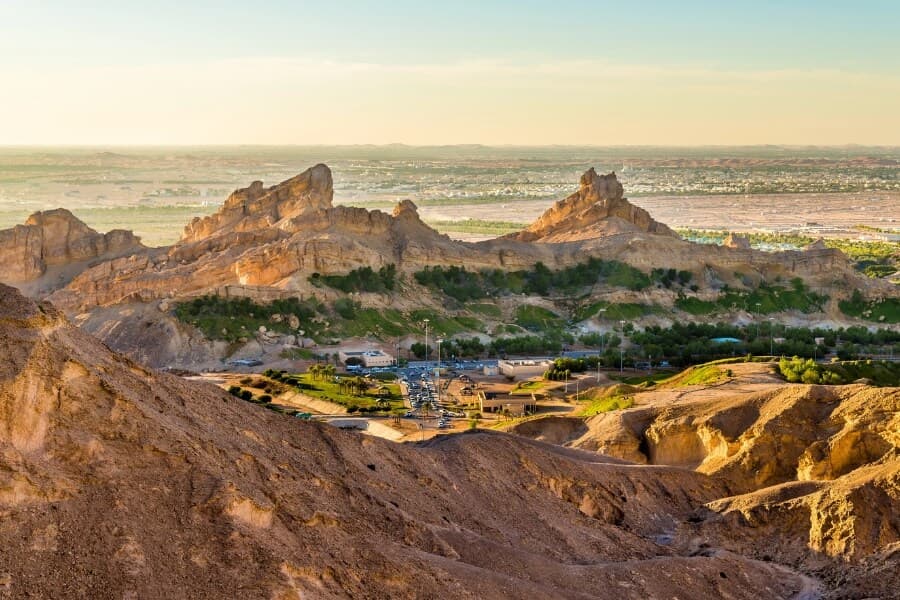
The Mountain and Desert Access: Al Ain's most dramatic attraction is Jebel Hafeet, a mountain rising 1,240 meters from the surrounding desert with a spectacular paved road featuring 60 corners and corners that climb to the summit. Standard sedans handle this route easily, but the mountain driving requires attention and smooth control inputs. Additionally, the surrounding desert areas include wadis, fossil sites, and Bedouin areas accessible via maintained dirt roads that standard sedans can navigate with care, or via rough tracks requiring proper 4x4 capability.
The Border Proximity: Al Ain sits directly on the border with Oman, and several border crossings in the area allow travel between countries. Some of Al Ain's most interesting destinations, including certain wadis and mountain routes, exist in gray zones where roads appear to cross back and forth between UAE and Oman. Rental agreements typically restrict vehicles to UAE territory only, requiring separate insurance and permissions for Oman entry. Understanding where borders are and which destinations require Oman access prevents inadvertent violations of rental terms that void insurance coverage.
Vehicle Selection: Matching Capability to Desert City Needs
The vehicle choice for Al Ain requires balancing practical considerations with the specific environments you'll encounter.
Mid-Size Sedans as the Sweet Spot: For most Al Ain visitors focusing on the main attractions and paved routes, mid-size sedans (Toyota Camry, Honda Accord, Nissan Altima) provide optimal balance. These vehicles have AC capacity to handle the extreme heat, power adequate for mountain driving to Jebel Hafeet, fuel efficiency that matters given the substantial distances, and trunk space for supplies (water, food, emergency equipment) that desert driving demands. The ride comfort during extended driving is substantially better than compact economy cars, and the daily rates of 120-150 AED represent reasonable value for the capability provided.
The Toyota Camry particularly dominates the UAE rental market and maintains reputation for reliability in extreme conditions. The ubiquity means parts and service are readily available if problems occur, and rental companies maintain these vehicles knowing they'll endure harsh conditions for years. For visitors who want reliable, comfortable transportation without unnecessary complications, the Camry represents the safe choice that rarely disappoints.
SUVs for Comfort and Capability: Larger vehicles like the Toyota Fortuner, Nissan Patrol, or various crossovers appeal to families needing space, visitors carrying substantial luggage or outdoor equipment, or those wanting the psychological comfort of elevated driving position and substantial presence. The AC capacity is generally excellent, the ride quality over rough roads improves compared to sedans, and the capability to handle maintained dirt roads expands which destinations you can comfortably reach.
However, the fuel consumption penalty is substantial—a Patrol might consume 50-75% more fuel than a Camry covering the same distances, and in Al Ain where you'll drive extensively, this adds 100-200 AED or more to weekly fuel costs. The daily rental premium of 80-150 AED over sedans combines with fuel costs to make SUVs expensive choices unless you genuinely need the space or capability they provide.
True 4x4s for Desert Exploration: If your Al Ain plans include serious desert exploration, reaching remote wadis, or accessing archaeological sites via rough tracks, proper 4x4 vehicles (Land Cruiser, Patrol with off-road package, Jeep Wrangler) become necessary. These vehicles provide ground clearance, low-range gearing, and structural strength that off-road conditions demand, plus rental agreements that explicitly permit off-road use rather than restricting vehicles to paved surfaces.
The consideration is whether you'll actually use this capability. The main Al Ain attractions are all accessible via paved roads. The Jebel Hafeet mountain road is completely paved. The major wadis have graded dirt access that sedans can navigate carefully. Unless you're specifically planning desert camping, remote fossil hunting, or exploration beyond established routes, the 4x4 capability remains largely unused while you pay daily premiums of 150-250 AED over standard sedans.
Luxury Options: Al Ain's rental market includes some luxury vehicles, though selection is far more limited than Dubai or Abu Dhabi. The question becomes whether luxury features add value in Al Ain's context. A Mercedes S-Class provides exceptional comfort for the mountain drive to Jebel Hafeet, but most of your driving will be point-to-point transportation between attractions where luxury refinements matter less than reliable AC and adequate fuel range. For visitors who simply prefer luxury vehicles regardless of context, options exist, but most practical Al Ain visitors find mid-range vehicles better matched to the environment and usage patterns.
The Rental Process: Al Ain-Specific Considerations
The basic rental requirements mirror those throughout the UAE: valid driver's license or IDP as required by nationality, passport with visa or entry stamp, credit card for deposit. However, Al Ain's market characteristics create some practical differences.
Limited Rental Market: Al Ain has substantially fewer rental companies than Dubai or Abu Dhabi. The international chains maintain presence (Budget, Hertz at the airport and major hotels), but the selection is more limited. The local rental market includes established companies serving business travelers and residents, plus smaller operators of varying reliability. This limited competition can mean less aggressive pricing than Dubai's intensely competitive market, but it also means fewer alternatives if your preferred company is fully booked or if problems arise with chosen operator.
Airport vs City Locations: Al Ain International Airport handles limited commercial traffic, primarily serving Abu Dhabi-based flights. Most international visitors reach Al Ain by driving from Dubai or Abu Dhabi, making airport rental less common than city-based pickup locations. This creates different dynamic than airports where rental counters cluster together—you'll likely need to navigate to specific company offices scattered around the city, requiring clear directions and sometimes taxi rides to reach pickup locations if you're arriving via bus or arranged transport.
One-Way Rentals: For itineraries that begin or end in Al Ain but not both, one-way rentals allowing pickup in one city and return in another create logistics solutions. However, availability varies by company, and one-way fees can be substantial (200-500 AED) depending on distance and company policy. Confirming one-way options during booking prevents surprise charges or forced backtracking to return vehicles to origin cities.
Navigating Al Ain: Roads, Routes, and Desert Awareness
Al Ain's road network reflects its inland desert location and historical development patterns, creating driving environment distinct from coastal emirates.
The Main Highways: The E22 (Truck Road) and E66 connect Al Ain to Abu Dhabi, offering alternative routes with different characteristics. The E22 is newer, faster, and more direct, making it preferred for most travelers despite being slightly longer in distance. The E66 passes through small towns and has more traffic lights and lower speed limits, but offers glimpses of traditional UAE life that the highway bypasses. The E16 connects Al Ain to Dubai via the eastern route through desert, taking approximately 90-120 minutes depending on traffic and specific origin/destination points.
These highways are well-maintained, clearly marked, and patrolled by radar cameras enforcing speed limits of 120-140 km/h with standard 20 km/h tolerance. The drives are monotonous—endless desert broken by occasional truck stops and service areas—making them suitable for podcasts, audiobooks, or simply mental decompression rather than scenic drives requiring attention to surroundings.
The Jebel Hafeet Mountain Road: The drive to Jebel Hafeet's summit ranks among the UAE's finest driving roads, featuring 11.7 kilometers of perfectly paved tarmac with 60 corners climbing from desert floor to 1,240-meter peak. The road opened in 1980 and has been meticulously maintained, providing smooth surface and excellent sight lines throughout despite the dramatic elevation gain and constant curves.
Standard sedans handle the route comfortably—the road doesn't require special capability, just attention and smooth driving that respects the curves and changing gradients. The key is managing speed appropriately, using engine braking on descent to avoid overheating brakes, and being aware of cyclists who use the road for training. The Mercure Grand Jebel Hafeet Hotel at the summit provides destination for coffee or meals with spectacular views, and various viewpoints along the route offer photograph opportunities that justify the journey independent of reaching the summit.
The temperature difference between Al Ain city (potentially 45°C) and the summit (perhaps 35-38°C) is noticeable but don't expect dramatic cooling—it's still very hot compared to normal mountain experiences elsewhere. Winter months (November-February) provide more dramatic temperature differences and the most pleasant conditions for the drive.
Internal Al Ain Roads: The city's internal road network includes modern highways and older roads through traditional neighborhoods and oasis areas. The traffic is generally lighter than Dubai or Abu Dhabi, making navigation less stressful despite occasional confusing intersections or unclear signage. Speed limits range from 40-80 km/h in urban areas, with camera enforcement throughout. The key is patience—Al Ain's distances mean you can't rush between attractions, so accepting the travel time and building adequate buffer prevents stress and speeding violations.
Desert Tracks and Wadi Access: Many of Al Ain's most interesting destinations beyond the main attractions require navigating dirt roads of varying quality. The graded roads to certain wadis and sites like Hili Archaeological Park are accessible to standard sedans driven carefully. However, soft sand, rocky tracks, or routes requiring water crossings demand 4x4 capability and explicit rental permission for off-road use.
The critical rule is understanding where your rental agreement permits driving and having realistic assessment of your off-road skills if you've rented a capable vehicle with permission. The desert is unforgiving of mistakes—getting stuck in soft sand or damaging a vehicle on rocky tracks creates expensive problems that enthusiasm and ignorance cannot overcome. Unless you have genuine off-road experience, stick to established routes that show evidence of regular use rather than attempting pristine tracks that look inviting but might become traps.
Al Ain's Essential Destinations: Where Your Rental Car Enables Discovery
Al Ain's attractions justify the rental car investment through their distribution across territories that public transport doesn't serve and that taxis reach expensively.
The Al Ain Oasis: This UNESCO World Heritage site sprawls across 1,200 hectares in the city center, featuring over 147,000 date palms watered by the traditional falaj irrigation system that's been in use for over 3,000 years. The oasis has multiple access points with parking areas, and walking paths allow several hours of exploration through the date groves seeing traditional agriculture methods still practiced today. Your rental car provides flexibility to enter at convenient points and combine the oasis visit with nearby attractions like the Al Ain Palace Museum, Sheikh Zayed's birthplace transformed into museum showcasing his life and the region's history.
Jebel Hafeet and Hot Springs: Beyond the mountain drive itself, the base of Jebel Hafeet includes the Green Mubazzarah area with natural hot springs, landscaped parks, and camping facilities. The contrast between the 45°C ambient temperature and the 40°C hot spring water creates bizarre experience—the springs feel cool by comparison despite being objectively very hot. The area offers family-friendly recreation and dining options that combine naturally with the mountain drive to create full-day excursion.
Al Ain Zoo: One of the world's largest zoos focusing on endangered species and desert-adapted animals, the Al Ain Zoo requires 3-4 hours minimum to experience properly. The facility sits several kilometers outside the main city area, accessible only by personal vehicle unless you're on organized tour. The zoo's size and Al Ain's heat make the visit physically demanding, but the quality and breadth of exhibits justify the effort, particularly for families with children.
Archaeological and Heritage Sites: Hili Archaeological Park preserves Bronze Age tombs and settlements from around 3000 BCE, offering tangible connection to civilizations that thrived in this harsh environment millennia before oil wealth. The Al Ain National Museum and various fort sites scattered around the region provide additional historical context. Each requires dedicated drives to reach, but collectively they tell the story of human adaptation and civilization in one of the world's most challenging environments.
Camel Market: The Al Ain Camel Market offers authentic glimpse of traditional commerce still practiced today. Hundreds of camels are traded daily, and the market operates early morning (before heat becomes unbearable) with activity peaking around 6:00-8:00 AM. Reaching the market requires rental car, and the early timing means dedicating a morning to the experience, but the authenticity and cultural insight justify the effort for visitors interested in genuine Emirati traditions beyond tourist performances.
Wadis and Natural Areas: The surrounding desert includes multiple wadis—dry riverbeds that briefly flow during rare rains but provide hiking, fossil hunting, and natural exploration opportunities year-round. Wadi Adventure, the region's artificial whitewater facility, offers rafting and kayaking in the desert. Natural wadis like those in the Hajar Mountains require research, navigation, and appropriate vehicles to reach, but reward visitors with experiences that tourist Al Ain doesn't advertise.
Strategic Considerations: Al Ain as Base or Destination
The decision about whether to base yourself in Al Ain versus treating it as day trip from coastal emirates depends on your interests, itinerary, and tolerance for desert heat and slower pace.
Al Ain as Primary Base: For extended stays, particularly during winter months (November-March) when temperatures become pleasant, Al Ain offers affordable accommodation, authentic Emirati character, and access to attractions that coastal emirates cannot match. The rental car enables driving to Dubai (90 minutes) or Abu Dhabi (90-120 minutes) for urban experiences while maintaining base in Al Ain's more relaxed and affordable environment.
The tradeoffs are significant: Al Ain is genuinely hot for 8-9 months annually, making extended outdoor exploration uncomfortable or dangerous. The entertainment and dining options are limited compared to Dubai's endless variety. The city essentially shuts down after 10:00 PM with little nightlife or late-night activity. For visitors seeking cultural depth, natural beauty, and historical authenticity, these compromises are acceptable. For those prioritizing entertainment, luxury, and convenience, Al Ain becomes difficult to justify as primary base.
Al Ain as Day Trip from Dubai/Abu Dhabi: Many coastal-based visitors rent cars and drive to Al Ain for day trips, typically focusing on one or two major attractions like Jebel Hafeet and the Al Ain Oasis. This works for checking boxes but doesn't allow the depth of exploration that Al Ain rewards. The 180-300 kilometer round trip from Dubai or Abu Dhabi consumes 3-4 hours of driving time before you even begin exploring Al Ain itself, leaving limited time for actual experience.
Multi-Day Al Ain Focus: The optimal approach for visitors genuinely interested in Al Ain's offerings is dedicating 2-3 days with accommodation in the city, allowing morning starts to avoid peak heat, adequate time for major attractions, and flexibility to pursue interests without rushing back to coastal hotels. This duration enables visiting the zoo, exploring the oasis and museums, driving Jebel Hafeet during different times of day, visiting the camel market early one morning, and discovering lesser-known sites that day-trippers miss. The rental car becomes your companion for the entire period rather than just transportation for single-day checklist completion.
Practical Tips for Al Ain Rental Success
Heat Management: Always carry multiple liters of water in the car, even for short trips. The heat is dangerous if mechanical problems or getting stuck leaves you unable to run AC. Park in shade whenever possible—even brief sun exposure makes interiors dangerously hot. Use windshield sun shades religiously. Check that the rental car's AC works perfectly before leaving the lot, and refuse vehicles with marginal cooling capacity.
Fuel Strategy: Al Ain has adequate fuel stations along main routes, but desert areas and some outlying attractions have sparse coverage. Fill up before desert excursions or long drives. The fuel prices are identical throughout UAE (government-regulated), so there's no advantage to waiting. Most stations are full-service with attendants who pump fuel for you, though self-service options exist.
Navigation and Connectivity: Al Ain's urban areas have excellent cell coverage, but desert regions and some mountain areas have gaps. Download offline maps (Google Maps and Maps.me both offer this) before venturing into areas where coverage might be unreliable. Having backup navigation prevents getting lost in environments where mistakes can quickly become dangerous.
Timing Your Activities: Schedule outdoor activities and major drives for early morning (6:00-10:00 AM) or late afternoon (4:00 PM onward) during hot months. The midday heat from 11:00 AM to 4:00 PM is genuinely dangerous for extended outdoor exposure. This timing requires discipline but makes the difference between enjoyable exploration and survival endurance challenges.
Border Awareness: Understand where the Oman border is and what destinations require crossing it. Some attractive destinations visible on maps require Oman entry that rental agreements don't permit. GPS sometimes shows routes that cross borders where there are no official checkpoints, creating situations where you inadvertently enter Oman illegally. Verify destination locations and planned routes to ensure you stay within UAE territory unless you've specifically arranged cross-border permissions.
Emergency Preparedness: The desert environment demands more preparation than urban coastal driving. Beyond water, carry basic tools, a flashlight, a first-aid kit, and a physical map as backup to electronic navigation. Inform someone of your plans if venturing into remote areas. The UAE is generally very safe, but mechanical problems or getting stuck in areas without cell coverage creates situations where preparation determines whether you face minor inconvenience or genuine emergency.
The Verdict: Al Ain Rentals for Cultural Depth and Desert Discovery
Renting a car in Al Ain makes sense for visitors seeking the UAE beyond its famous modern face—those drawn by history and culture, by desert landscapes and mountain scenery, by authentic experiences that haven't been packaged and polished for tourist consumption. Al Ain rewards curiosity and independence in ways that organized tours and coastal emirates cannot replicate.
The rental experience requires attention to heat management, distance considerations, and appropriate vehicle selection. The driving environment differs from coastal emirates through extreme temperatures, longer distances between attractions, and desert conditions that demand respect and preparation. But these challenges are manageable with awareness and planning, and the rewards justify the effort.
Al Ain reveals the UAE's foundation—the oases that sustained civilization in harsh desert, the forts that protected trade routes, the traditions that defined culture before oil wealth transformed everything, and the natural environments that shaped adaptation and survival strategies across millennia. Your rental car is the tool that converts these abstract historical concepts into tangible experiences that deepen understanding and appreciation for how the UAE became what it is today.
For visitors willing to embrace heat, distance, and slower pace in exchange for authenticity, cultural depth, and natural beauty, Al Ain delivers experiences that justify the journey inland from the coast. The rental car makes these experiences accessible, transforming Al Ain from distant desert city that might merit brief day trip into destination that rewards extended exploration and reveals the UAE's soul beneath its glass-and-steel exterior.
The desert roads await, leading to oases that have sustained life for thousands of years, to mountains that offer perspectives impossible to achieve on the flat coastal plain, to archaeological sites that prove civilization's resilience in seemingly impossible conditions. Al Ain demands wheels to reveal these treasures, and those who arrive with rental cars and open minds discover that the UAE's heritage and natural beauty run far deeper than Dubai's skyscrapers suggest.