


JOURNAL
Renting a Car in Sharjah
By Alaa Halabi
Renting a Car in Sharjah: The Complete Guide to the UAE's Cultural Capital
Superior can deliver and collect the luxury rental car from Sharjah for 700 AED. Sharjah occupies unique position in the UAE's constellation of emirates. It's the country's third-largest city, home to over 1.5 million residents, and serves as the nation's official cultural capital with more museums, galleries, and heritage sites than any other emirate. Yet it receives fraction of the tourist attention that Dubai and Abu Dhabi command, creating interesting dynamic for visitors: genuine Emirati culture and affordable experiences without the overwhelming crowds and premium pricing that define its more famous neighbors.
For visitors to Sharjah, whether for business, culture, or as an alternative base for exploring the wider UAE, car rental becomes essential consideration. The emirate's geography, its relationship to Dubai, and its distinct character all influence transportation decisions in ways that differ from renting in Dubai or Abu Dhabi. Understanding these nuances, along with Sharjah's specific regulations and practical considerations, determines whether your rental experience enhances or complicates your visit to this often-underappreciated emirate.
Why Sharjah Demands Its Own Rental Approach
Sharjah's position immediately adjacent to Dubai creates both opportunities and complications for visitors. The two emirates share a continuous urban area with no clear boundary visible to casual observers, yet they maintain separate governments, regulations, and distinct characters that affect how you approach transportation.
The cost advantage of Sharjah cannot be overstated. Hotel rates, dining costs, and importantly car rental prices all run substantially lower than Dubai equivalents. A mid-size sedan that costs 150-180 AED per day in Dubai might rent for 100-120 AED in Sharjah, and the savings compound over multi-day or weekly rentals. For budget-conscious travelers or extended business stays, these differences accumulate to hundreds or thousands of dirhams in savings that can be redirected to experiences, dining, or simply reducing trip costs.
However, Sharjah's practical geography creates complications. The emirate has no major international airport serving scheduled commercial flights; Sharjah International Airport handles primarily budget carriers and cargo operations. Most international visitors arrive at Dubai International Airport (approximately 15 kilometers from Sharjah's border) or Dubai World Central/Al Maktoum International Airport (about 60 kilometers away). This means your rental car journey likely begins in Dubai even if your accommodation and primary activities are in Sharjah.
The border between Dubai and Sharjah, while legally significant, appears as nothing more than signage to drivers. There are no checkpoints, no passport controls, no obvious transition beyond the signs announcing you've entered a different emirate. However, the administrative boundary creates important implications for toll systems, traffic violations, and rental agreements that we'll address in detail.
Understanding Sharjah's Cultural Context and Regulations
Sharjah maintains more conservative social policies than Dubai or Abu Dhabi, reflecting the emirate's commitment to preserving traditional values and Islamic culture. These policies directly affect visitors in ways that don't apply in the more liberal neighboring emirates.
Alcohol Restrictions: Sharjah is completely dry, meaning no alcohol sales or consumption anywhere in the emirate including hotels and restaurants. For visitors accustomed to the licensed bars and restaurants common in Dubai, this represents significant cultural shift. Importantly for drivers, the zero-tolerance applies absolutely—any detected alcohol in your system while driving results in immediate arrest and serious legal consequences regardless of how much or when you consumed it. Even trace amounts from the previous night can trigger prosecution. For rental car drivers, this means absolute sobriety at all times when operating vehicles in or through Sharjah.
Modest Dress Codes: While the dress code isn't as strictly enforced as Saudi Arabia or some Gulf nations, Sharjah expects more conservative attire than Dubai. This affects car rental indirectly through visits to certain attractions, government offices if handling documentation, and public spaces. The [Sharjah Museum of Islamic Civilization](https://www.sharjahmuse ums.ae/), heritage areas, and particularly the beautiful Al Noor Mosque (one of few mosques open to non-Muslim visitors) require respectful modest clothing. Planning your car-based itinerary requires awareness of these expectations to avoid problems or denied entry.
Friday Timing: As an Islamic emirate, Friday holds religious significance with businesses closing or operating reduced hours during prayer times, particularly for Jummah (Friday congregational prayers). Traffic patterns change dramatically on Friday mornings as residents head to mosques, then shift again as people transition to leisure activities in the afternoon. Planning rental car pickups or returns on Fridays requires confirming the rental company's operating hours and allowing extra time for unusual traffic patterns.
Vehicle Selection for Sharjah: Different Priorities Apply
The vehicle choice for Sharjah-based rental follows similar logic to other UAE locations but with some distinct considerations based on how you'll likely use the car and what areas you'll access.
Economy Through Mid-Size Sedans: For most Sharjah visitors, vehicles in the Toyota Yaris through Toyota Camry range provide optimal balance of cost, capability, and comfort. Sharjah's roads are well-maintained, parking is generally more available than Dubai's congested areas, and the distances within the emirate rarely justify larger vehicles. The fuel efficiency matters more for Sharjah visitors because you'll likely be driving to Dubai and potentially other emirates regularly, accumulating substantial kilometers that become expensive in thirsty SUVs.
The Nissan Sunny, Toyota Corolla, and Honda Civic represent the sweet spot for solo travelers or couples planning extended stays. These vehicles handle highway driving to Dubai confidently, provide adequate trunk space for shopping or beach equipment, and maintain comfortable interior temperatures despite the Gulf heat. The daily rental rates typically range from 80-120 AED through local Sharjah companies, sometimes even lower for weekly or monthly commitments.
SUVs and Family Vehicles: Families or groups requiring more space will find SUVs priced substantially lower in Sharjah than Dubai. A Toyota Fortuner, Nissan Patrol, or similar large SUV might cost 150-200 AED daily in Sharjah versus 250-350 AED in Dubai. If your group needs this capacity and you're staying in Sharjah, booking locally makes clear financial sense. However, honestly assess whether you need the capability—Sharjah's compact urban core makes parking larger vehicles more challenging, and the fuel consumption adds 50-100 AED daily to operating costs versus efficient sedans.
Luxury and Performance Options: Sharjah's rental market includes some luxury vehicles, though the selection is far more limited than Dubai's extensive exotic car rental industry. A handful of companies offer Mercedes, BMW, and Audi vehicles at rates 30-40 percent below Dubai equivalents. However, if your priority is accessing specific luxury or exotic vehicles, Dubai's rental market offers vastly more selection. The strategy becomes whether you value Sharjah's cost savings or Dubai's vehicle variety more highly.
The Documentation and Rental Process
The rental requirements in Sharjah mirror those throughout the UAE with some company-specific variations based on whether you're using international chains or local operators.
For Tourists: You'll need your passport showing valid visa or entry stamp, your home country driver's license (or International Driving Permit if required for your nationality), and a credit card for the security deposit. The process works identically to Dubai or Abu Dhabi, with the same country-specific requirements for IDP versus direct license recognition. The rental companies, whether international chains or local operators, access the same systems for verifying documentation and processing rentals.
For UAE Residents: A valid UAE driver's license, Emirates ID, and credit card complete the requirements. Some Sharjah companies accept cash deposits rather than requiring credit cards, a practice less common in Dubai where credit card deposits are standard. However, credit cards remain preferable because they simplify the deposit refund process and provide better documentation if disputes arise.
Insurance and Coverage: Sharjah rentals include the same basic third-party liability insurance required throughout the UAE. The deductibles and CDW (Collision Damage Waiver) options function identically, with typical deductibles ranging from 1,500 to 3,000 AED depending on vehicle value. The insurance you purchase in Sharjah covers you throughout the UAE—there's no additional requirement when crossing into Dubai or other emirates. However, verify that your agreement explicitly allows cross-emirate travel; some extremely budget operators restrict vehicles to Sharjah only, though this is rare and typically limited to very old vehicles or special promotional rates.
Navigating Sharjah: Roads, Traffic, and Reality
Sharjah's road network reflects the emirate's older development patterns and more organic growth compared to Dubai's master-planned highways. This creates character that's more authentic but also occasionally more confusing for visitors expecting the geometric precision of Dubai's grid system.
The Highway Connections: The E11 (Sheikh Mohammed Bin Zayed Road) forms Sharjah's main north-south artery, connecting to Dubai at the south and continuing north through Ajman and toward Ras Al Khaimah. The E88 (Emirates Road/Maliha Road) provides alternative routes and connects to Sharjah's inland areas. The E311 (Emirates Road) runs parallel to the coast further inland, offering bypass routes that avoid the congested border areas. Learning these major routes quickly becomes essential because Sharjah's internal roads can be confusing, and having clear mental maps of the highway options helps when navigation systems fail or traffic forces route changes.
The Infamous Dubai-Sharjah Border Traffic: The road connections between Dubai and Sharjah carry some of the UAE's heaviest traffic volumes, creating legendary congestion during peak hours. Morning rush (6:30-9:30 AM) sees massive traffic flowing from Sharjah into Dubai as hundreds of thousands of workers commute to jobs. Evening rush (5:00-8:30 PM) reverses this flow as people return home. The delays can reach 60-90 minutes for journeys that take 15-20 minutes during off-peak hours.
For visitors with rental cars based in Sharjah who plan Dubai activities, this border congestion demands strategic planning. Schedule Dubai visits for mid-morning through mid-afternoon, avoiding the peak commute times entirely. Consider that attractions opening at 10:00 AM mean leaving Sharjah by 9:00 AM to allow cushion for traffic. Evening returns should happen after 8:30 PM when congestion subsides, or alternatively, extend your Dubai stay through dinner and return after 9:00 PM. Friday mornings offer the clearest border crossings as most weekly workers have the day off, though traffic builds in the afternoon as people pursue leisure activities.
Parking in Sharjah: Sharjah uses paid parking (mawaqif) in commercial areas and popular districts, but the system is less extensive than Dubai's coverage. Many areas still offer free parking, particularly in older neighborhoods and residential areas. The paid zones are managed by Sharjah City Municipality, with rates typically 2-3 AED per hour—lower than Dubai's premium zones but similarly enforced with fines for violations. Payment is via SMS (send your plate number to designated number), smartphone apps, or parking meters where available.
The Al Qasba area, the Blue Souk (Central Market), and Sharjah's heritage area all offer dedicated parking that's either free or very affordable. The museum district near the heritage area provides ample parking serving multiple museums and cultural sites within walking distance, making it practical to park once and explore on foot.
Speed Cameras and Enforcement: Sharjah deploys extensive camera systems monitoring speed and traffic violations. The speed limits are typically 60-80 km/h on urban roads and 100-120 km/h on highways connecting to other emirates. The tolerance system (typically 20 km/h over posted limits before fines trigger) applies throughout Sharjah as in the rest of the UAE. The camera systems are interconnected across emirates, meaning violations committed in Sharjah appear on the vehicle's record even if registered in Dubai, and vice versa.
The Salik Complication: Cross-Emirate Driving
Sharjah has no toll roads of its own, but the moment you cross into Dubai, you enter the Salik (toll gate) system that charges 4-8 AED per crossing. The gates appear on major routes including Sheikh Zayed Road, Al Maktoum Bridge, Al Garhoud Bridge, and other key arteries. A single trip to Dubai might cross 2-4 Salik gates depending on your route and destination, and a round trip doubles these charges.
Most Sharjah rental cars include Salik tags, and the rental company tracks your crossings and bills you at rental conclusion, typically adding small administrative fees (5-10 AED) per crossing. Some budget operators don't include Salik and require you to register and pay separately, though this is increasingly rare. Confirming Salik handling during rental pickup prevents surprise charges and clarifies whether you need to take any action regarding toll payment.
The strategic implication for Sharjah-based visitors is that frequent Dubai trips add substantial costs. A week-long rental with daily Dubai visits might accumulate 200-300 AED in Salik charges beyond the base rental cost. This doesn't make the trips not worthwhile, but it should factor into your budgeting and itinerary planning. Consolidating multiple Dubai activities into fewer but longer trips reduces the per-activity toll cost and makes the expense more palatable.
Sharjah-Specific Destinations: Where Your Rental Car Enables Discovery
Sharjah's attractions spread across the emirate in ways that make car rental particularly valuable. Unlike Dubai where many attractions cluster in tourist zones accessible by metro, Sharjah's sites require point-to-point driving that public transportation serves poorly.
The Heritage Area: Sharjah's beautifully restored heritage area includes multiple museums, the traditional souq, and historical buildings showcasing pre-oil Gulf life. The area has dedicated parking and allows several hours of exploration on foot once parked. Your rental car gets you there conveniently, then sits secure while you walk the photogenic alleys and visit sites like the [Sharjah Heritage Museum](https://www.sharjahmuse ums.ae/) and Sharjah Fort (Al Hisn).
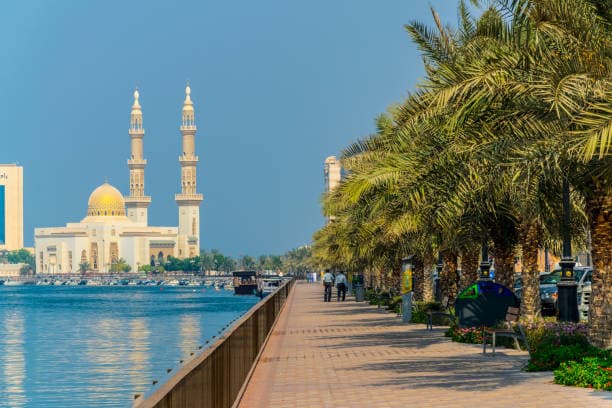
Al Noor Island: This beautifully landscaped island in Khalid Lagoon features the stunning Al Noor Mosque, butterfly house, and art installations. It's accessible via short causeway with parking at the entrance. Evening visits offer cooler temperatures and beautiful lighting that makes photography particularly rewarding. The rental car enables flexible timing that bus schedules cannot accommodate.
Sharjah Desert Park: Located about 28 kilometers east of Sharjah city, this complex includes the Arabia's Wildlife Centre, Natural History Museum, and children's farm. It's genuinely worthwhile for families and nature enthusiasts, but reaching it requires personal vehicle. Tour buses serve the location, but having your rental car allows staying as long as interests dictate rather than following tour schedules.
East Coast Access: Sharjah's territory includes the east coast emirates of Kalba and Khor Fakkan, facing the Gulf of Oman rather than the Arabian Gulf. The drive from Sharjah city takes 90-120 minutes through dramatic mountain scenery, and the east coast offers spectacular beaches, snorkeling, and the beautiful Khor Fakkan Amphitheater. This excursion is impractical without rental car, and it showcases aspects of the UAE that beach resorts and urban attractions cannot provide.
Rental Company Selection in Sharjah
Sharjah's rental market divides clearly between international chains with Sharjah branches and purely local operators ranging from professional to questionable.
International Chains: Budget, Hertz, Europcar, and others maintain offices in Sharjah, typically near the airport or in major commercial areas. Their rates in Sharjah typically run 20-30 percent lower than their Dubai branches for identical vehicles and terms. The same standards, processes, and customer service that define these companies globally apply in Sharjah, making them safe choices for visitors prioritizing predictability over absolute minimum cost.
Reputable Local Companies: Sharjah has several established local rental companies with years of operation, good maintenance standards, and fair business practices. These companies offer rates 30-50 percent below international chains while maintaining adequate standards and reasonable customer service. Finding these companies requires research—reading recent Google reviews, checking company longevity, and confirming that terms are clearly written and understood before signing. The savings can be substantial, but unlike international chains where you know generally what to expect, local companies demand more individual assessment.
Budget Operators to Approach Cautiously: The bottom tier of Sharjah's rental market includes operators advertising remarkably low rates that seem too good to be true and often are. Very old vehicles, aggressive damage claims, poor maintenance, unclear insurance terms, and unprofessional behavior characterize the worst operators. Some provide fine service despite low rates, but distinguishing legitimate budget options from problematic ones requires careful vetting. Extremely low rates (below 70-80 AED daily for recent economy sedans) should trigger skepticism and extra scrutiny of reviews and terms.
Strategic Considerations: Sharjah as Base vs Dubai Alternative
The decision to rent in Sharjah versus Dubai often reflects where you're staying and how you'll spend your time. Several scenarios favor Sharjah rentals:
Extended Stays on Budget: For visits of two weeks or longer where cost control matters, Sharjah offers compelling savings. The combination of lower rental rates, cheaper accommodation, and reduced daily expenses (parking, dining, etc.) compounds to substantial total savings. Monthly rental rates in Sharjah can reach 1,800-2,500 AED for decent mid-size sedans—costs that would run 3,000-4,000 AED in Dubai. For business travelers on extended assignments or visitors planning longer holidays, these savings justify the tradeoffs.
Cultural Focus Trips: Visitors prioritizing museums, heritage sites, and authentic Emirati culture over luxury shopping and nightlife will find Sharjah more aligned with their interests. The rental car enables efficient access to Sharjah's excellent museum network, heritage areas, and cultural attractions while maintaining flexibility to visit Dubai's sites without being based there at premium prices.
Family Travel on Budget: Families needing larger vehicles and multiple rooms find accommodation and rental costs in Sharjah dramatically lower than Dubai. A two-bedroom apartment and SUV rental in Sharjah might cost less than a single hotel room and sedan rental in Dubai. For families prioritizing budget efficiency and not requiring luxury experiences, Sharjah provides excellent value while keeping Dubai accessible for targeted visits.
The Tradeoffs: Sharjah-based rentals require accepting longer travel times to Dubai attractions, missing the energy and entertainment options that Dubai offers in abundance, and navigating the border traffic that defines the region's worst congestion. For visitors prioritizing convenience, luxury, or nightlife, these compromises outweigh the cost savings. The strategic calculation is personal and depends on trip duration, budget constraints, and what experiences you value most.
Practical Tips for Sharjah Rental Success
Book with Flexibility: Sharjah rental companies, particularly smaller local operators, sometimes operate more flexibly than Dubai's corporate structures. Negotiating rates for weekly or monthly rentals often yields discounts not advertised online. Booking direct rather than through third-party platforms sometimes enables conversations about rates, insurance options, and specific vehicle requests that automated systems don't accommodate.
Document Everything: The advice to photograph vehicles thoroughly during pickup and return applies doubly when using unfamiliar local companies. Take timestamped photos of every panel, the interior, the fuel level, and the odometer. Note any existing damage on the rental agreement and ensure the agent acknowledges it in writing. During return, insist on inspection while you're present and photograph the agent's condition report if possible. This documentation protects against disputed damage claims that some less scrupulous operators attempt.
Confirm Dubai Access: While most rentals allow cross-emirate travel, confirm this explicitly during pickup and verify that Salik handling is included and understood. Some extremely budget options restrict vehicles to Sharjah, and discovering this after driving to Dubai creates problems and potential contract violations that void insurance.
Plan Around Border Traffic: Accept that the Dubai-Sharjah border congestion is unavoidable during peak hours and plan accordingly. Use Google Maps or Waze to check traffic conditions before departing, and be willing to delay trips or adjust timing to avoid the worst congestion. The traffic is predictable, following consistent daily patterns, making it relatively easy to work around once you understand the timing.
Explore Thoughtfully: Sharjah rewards curious visitors willing to explore beyond the main highlights. Your rental car enables discovering neighborhood souqs, beach parks, desert viewpoints, and local restaurants that tour groups never visit. The freedom to follow interests rather than itineraries reveals Sharjah's authentic character that makes it special despite receiving less attention than its flashier neighbors.
The Verdict: Sharjah Rentals for Strategic Travelers
Renting a car in Sharjah makes strategic sense for specific visitor profiles: extended-stay travelers prioritizing cost efficiency, culture-focused visitors spending substantial time in Sharjah's museums and heritage sites, families needing larger vehicles and multiple accommodations on budgets, and anyone willing to accept tradeoffs in convenience and entertainment for substantial financial savings.
The process requires more research and attention than renting through established international chains in Dubai, but the savings justify the effort for cost-conscious travelers. The experience provides access to authentic Emirati culture and perspectives that Dubai's international character sometimes obscures. The freedom to explore at your own pace transforms Sharjah from a place to briefly visit into a destination worth extended time and attention.
The cultural differences, the border traffic, the more limited entertainment options—these are realities that make Sharjah unsuitable for some visitors but perfect for others. Understanding these factors before committing to Sharjah-based rental and accommodation prevents disappointment while allowing strategic travelers to maximize value and discover aspects of the UAE that mass tourism often misses.
For visitors approaching the UAE strategically rather than defaulting to Dubai because it's most familiar, Sharjah offers compelling alternative that delivers authentic experiences at sustainable costs while keeping the entire northern emirates accessible through the mobility that rental cars provide. The UAE's cultural capital rewards those willing to look beyond the obvious, and having wheels makes that exploration not just possible but genuinely enjoyable.