


JOURNAL
Why It's a Thrill to Drive an Exotic Sports Car
By Alaa Halabi
Why It's a Thrill to Drive an Exotic Sports Car: Understanding the Addiction
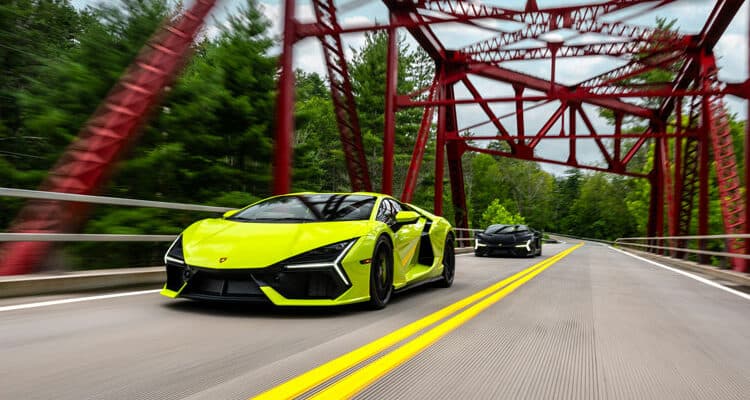
There's a moment that every exotic car driver remembers forever: the first time you truly squeeze the throttle in something genuinely exotic. Not the tentative acceleration in a parking lot, not the careful launch worrying about every bystander and their phone camera. The moment when traffic clears, when the road opens up, when you commit fully to the throttle and the car responds with violence that feels barely controlled. The sound becomes overwhelming. The acceleration pins you to the seat with force that seems impossible from a street-legal machine. Everything around you blurs as speed accumulates faster than your mind can process. And in that moment, you understand completely why people spend six figures on vehicles that objectively make no practical sense whatsoever.
The thrill of driving exotic sports cars isn't rational. It can't be justified through cost-benefit analysis or defended with logical arguments about transportation efficiency. It's visceral, emotional, and in many ways inexplicable to those who haven't experienced it. But for those who have felt a naturally aspirated V10 scream to 9,000 rpm, who've sensed a chassis communicating road texture through the steering wheel, who've pushed carbon ceramic brakes to their limits and felt them respond with reassuring confidence, the thrill is undeniable and addictive. Understanding why requires examining the physical, psychological, and emotional elements that combine to create experiences that transcend simple transportation.
The Physical Dimension: Sensory Overload in the Best Way
The physical sensations of driving exotic sports cars are fundamentally different from normal driving experiences. These aren't incremental improvements over regular cars—they're entirely different categories of stimulation that engage your senses in ways daily drivers cannot approach.
Acceleration That Defies Belief: Modern exotic cars deliver acceleration that your body genuinely struggles to process. A Lamborghini Huracán reaching 100 km/h in 2.9 seconds creates g-forces approaching 1.0G—your body weighs nearly twice its normal weight during that acceleration. Your internal organs compress against your spine. Your blood shifts rearward creating momentary lightheadedness. Your vision narrows as the speed builds. This isn't metaphorical description; these are actual physiological responses to forces your body didn't evolve to experience.
The thrill comes partly from this physical overwhelm. Exotic car acceleration triggers the same biological responses as extreme sports or roller coasters—adrenaline release, elevated heart rate, dilated pupils, and the complex cocktail of stress hormones that your body interprets as simultaneously threatening and exhilarating. Your primitive brain registers the acceleration as danger, but the rational mind knows you're safe, creating psychological tension that manifests as thrill.
But it's not just straight-line acceleration. The cornering forces in properly driven exotic cars approach 1.2-1.5G during aggressive direction changes. Your neck muscles strain holding your head level as lateral forces pull you toward the outside of the corner. Your hands grip the steering wheel fighting forces trying to straighten the front wheels. Your core engages maintaining position in the seat despite forces attempting to throw you sideways. You're not a passive occupant; you're actively working to control and stabilize yourself while the car generates forces that would be impossible to experience outside vehicles or aircraft.
Sound That Penetrates Your Soul: The naturally aspirated engines in exotic sports cars produce soundtracks that turbocharged and hybrid alternatives simply cannot replicate. A Ferrari V12 at 8,500 rpm creates complex harmonic frequencies that you don't just hear but physically feel vibrating through the cabin structure, through the seat, through your chest. The sound isn't background noise—it's primary experience that dominates consciousness and triggers emotional responses that bypass rational thought.
The mechanical violence of eight, ten, or twelve pistons reciprocating thousands of times per minute creates sound that your brain recognizes as barely controlled chaos. The exhaust notes on overrun—the pops, crackles, and burbles during deceleration—signal that extreme mechanical processes are occurring inches from where you sit. The intake roar as the throttle opens and the engine gulps air becomes visceral soundtrack to acceleration that makes the experience more intense than silent EVs can match despite their superior acceleration figures.
The sound varies across the rev range, creating narrative structure to acceleration that builds drama. Low-rpm burble gives way to mid-range growl that transitions to high-rpm scream approaching redline. Each phase of this progression engages your emotions differently, creating anticipation as you approach the next phase. The rev limiter cutting engine power at redline provides punctuation that signals you've extracted everything available. This auditory journey transforms acceleration from simple speed building into emotional experience with beginning, middle, climax, and resolution.
Tactile Communication: Exotic sports cars communicate through their controls in ways that modern mainstream cars have engineered away. The steering provides constant feedback about road surface texture, tire grip levels, and chassis loading. You feel bumps, cracks, and surface changes through the wheel rim. The brake pedal firmness and travel communicate exactly how much stopping force you're applying and how much capacity remains. The throttle response is immediate and proportional, creating direct connection between your foot and the engine's output.
This tactile richness isn't accidental—it's deliberately engineered. While mainstream manufacturers isolate drivers from road harshness and mechanical feedback to create refinement, exotic car engineers preserve these connections because they enhance control and engagement. The result is that driving exotic cars feels like dialogue between driver and machine rather than simply issuing commands to automation that manages everything behind the scenes.
The manual transmission, where still available, adds another dimension to this tactile experience. The gear lever requires deliberate movement through the gate, providing mechanical resistance and clear detents that confirm engagement. The clutch pedal travel and weight provide feedback about friction point and engine speed matching. Even paddle shifters in modern dual-clutch transmissions provide satisfying mechanical click and immediate response that maintains some connection to the transmission's operation. These interfaces demand attention and skill, making the driving experience active rather than passive.
The Psychological Dimension: Control, Mastery, and Flow State
Beyond physical sensations, exotic sports cars engage psychological processes that create profound satisfaction and absorption that psychologists recognize as "flow state"—complete immersion in activity where time distorts and self-consciousness disappears.
The Control Fantasy: Exotic sports cars provide control over powerful machinery that most aspects of modern life deny. You're not requesting that systems do things for you; you're directly controlling mechanical processes that translate your inputs into immediate physical results. The throttle position determines engine power output. The steering angle determines front wheel direction. The brake pressure determines deceleration force. The directness and immediacy create satisfaction that comes from genuinely controlling rather than merely influencing outcomes.
This control extends to choosing when and how intensely to engage the performance. You decide when to accelerate hard versus driving sedately. You determine whether to exploit the handling limits or cruise comfortably. You're not subject to others' decisions or dependent on systems responding to your requests—you're autonomous and powerful in ways that most daily activities don't allow. This psychological sense of agency and potency provides satisfaction independent of the actual driving outcomes.
The control fantasy is enhanced by the awareness that you're managing machinery that could be dangerous if mishandled. The risk isn't extreme—modern stability control and safety systems prevent most driver errors from becoming catastrophic—but it's present enough to create stakes that make the control feel meaningful. You're trusted to responsibly wield power that could cause harm, and successfully doing so provides satisfaction similar to other skilled activities where competence prevents negative outcomes.
Mastery and Progression: Driving exotic sports cars well requires skill development that follows clear progression paths. Initial drives might involve simply experiencing the acceleration and sound without approaching the limits. As familiarity grows, you begin exploring cornering capabilities, braking performance, and how various controls interact. Eventually, skilled drivers reach stages where they're actively managing weight transfer, using throttle inputs to adjust cornering lines, and approaching genuine performance driving rather than simply going fast.
This progression creates satisfaction through improvement. Each drive where you're slightly smoother, carry more speed through corners, or execute better heel-toe downshifts provides tangible feedback that your skills are developing. The cars themselves become teachers that reward proper technique with better performance and punish mistakes with outcomes ranging from suboptimal lap times to genuinely scary moments that provide powerful learning experiences.
The mastery element transforms exotic car driving from novelty that wears off into ongoing pursuit where there's always something to improve. You're not just consuming an experience; you're developing competence in domain that's challenging and rewarding. This ongoing development maintains engagement far longer than simple thrills would sustain interest.
Flow State Access: The concentration required to drive exotic sports cars quickly creates conditions ideal for flow state—the psychological phenomenon where you're completely absorbed in activity, lose self-consciousness, and experience time distortion. The demands are high enough to fully engage attention but not so overwhelming that anxiety prevents enjoyment. The feedback is immediate and clear—you know instantly whether you've executed corners well or made mistakes. The goals are obvious—drive smoothly, carry more speed, improve technique.
During flow state, the mental chatter that normally occupies consciousness quiets. You're not thinking about work problems, relationship concerns, or future anxieties. You're entirely present, focused on the immediate demands of controlling a powerful machine at speeds that require complete attention. This mental state is deeply satisfying and increasingly rare in modern life where distractions fragment attention and genuine absorption becomes difficult to achieve.
The flow state also explains why some people find exotic car driving meditative rather than merely thrilling. The complete focus and mental quiet create psychological benefits beyond simple excitement, providing mental restoration and clarity that carry over after the drive ends. This dimension transforms exotic car experiences from mere entertainment into activities with genuine psychological value.
The Emotional Dimension: Status, Achievement, and Living Dreams
Beyond physical and psychological elements, exotic sports cars engage emotions through their symbolic meanings and the achievement they represent.
The Dream Fulfillment: For many enthusiasts, exotic sports cars represent childhood fantasies made tangible. The poster on the bedroom wall becomes the machine you're actually piloting. The video game cars you virtually drove for thousands of hours become real metal and carbon fiber responding to your inputs. The achievement of accessing these vehicles—whether through ownership, rental, or temporary experience—validates effort and success in ways that other purchases cannot match because these cars represented aspirational impossibility rather than simply expensive things to acquire eventually.
The emotional power comes from bridging the gap between fantasy and reality. You're not imagining what it would be like to drive a Lamborghini or Ferrari—you're actually doing it. The disconnect between the dream you carried for years and the reality you're now experiencing creates powerful emotional responses that rational analysis cannot capture. For some people, these moments become genuinely profound experiences that they remember as life highlights despite being "just driving."
Status and Recognition: Exotic sports cars command attention and communicate status in ways that more expensive but less visually distinctive vehicles cannot match. The recognition is immediate and universal—people know these cars are special even if they can't identify specific models or understand technical details. The attention can be uncomfortable or gratifying depending on personality, but it's undeniable and creates emotional responses whether positive or negative.
The status element isn't purely shallow materialism, though critics often frame it that way. These cars represent achievement—you've succeeded sufficiently in life to access machines that most people can only admire from distance. The pride in this achievement is legitimate rather than something to apologize for. Whether you bought the car, rented it for a special occasion, or earned access through professional achievements, the ability to drive exotic sports cars signals that you've accomplished something that most of humanity hasn't and won't. The satisfaction in this realization is real and meaningful to those who worked hard to reach this point.
The Exclusive Club: Exotic car ownership or experience creates membership in exclusive community of people who share specific passion and appreciation. The fellow enthusiasts you meet, the events you access, and the conversations you have all create social connections that extend beyond the cars themselves. For some people, these social dimensions become as valuable as the driving experiences, creating networks that provide friendship, business opportunities, and shared identity that enrich life beyond simply owning interesting vehicles.
The community aspect matters because exotic car enthusiasm can feel isolating when most people in your life don't understand the appeal or actively criticize the expense as wasteful. Finding others who genuinely understand why these machines matter creates validation and belonging that addresses this isolation. The shared passion transcends other differences—you'll find yourself in deep conversations about cars with people whose politics, professions, and backgrounds differ dramatically from yours, united by common enthusiasm that bridges these gaps.
The Mortality Acknowledgment: There's subtle but real element of mortality awareness in exotic car enthusiasm. These are experiences you can't endlessly defer—health, regulations, and circumstances change in ways that might prevent future access. The awareness that this opportunity exists now but might not exist later creates urgency that enhances the emotional intensity of the experience. You're not just enjoying the car; you're seizing opportunity while it's available, living fully in ways that acknowledge life's transience.
This isn't morbid thinking but rather healthy recognition that compelling experiences should be pursued rather than perpetually postponed. The exotic car becomes vehicle (literally and metaphorically) for living intentionally and creating memories rather than deferring experiences until hypothetical perfect future moments that might never arrive.
The Practical Reality: Balancing Thrill with Context
The honest discussion must acknowledge that exotic sports car thrills exist within practical contexts that affect whether they're worth pursuing for specific individuals.
The Cost Barrier: Accessing exotic car thrills requires substantial financial resources whether through ownership, rental, or track day experiences. A Lamborghini rental for a day in Dubai might cost 3,000-5,000 AED. Ownership involves six-figure purchase prices plus maintenance costs that can exceed 10,000-20,000 AED annually. Track day experiences in exotic cars range from 2,000-5,000 AED for brief sessions to 15,000-30,000 AED for full-day programs with instruction.
These costs exclude substantial portions of the population from experiences that would otherwise provide genuine value and enjoyment. The democratization of performance through affordable sports cars (Mazda MX-5, Toyota GR86, used Corvettes) allows some aspects of the thrill at accessible prices, but the exotic experience specifically requires financial resources that privilege rather than skill or passion determines access.
The Legal and Safety Reality: The performance that creates the thrill exceeds legal limits and safety margins quickly. Accelerating to 200 km/h requires violating speed limits by factors of two or more. Exploring cornering limits on public roads risks losing control and injuring yourself or others. The responsible approach requires constraining performance to track environments, but this adds complexity and cost while reducing spontaneity that amplifies the thrill.
The legal risks are real—excessive speeding, reckless driving charges, and potential license suspension create consequences that can affect employment, insurance costs, and daily life far beyond the immediate violation penalties. The mature approach balances the desire for thrills with awareness that consequences can be severe and long-lasting if you're caught or if mistakes harm others.
The Diminishing Returns: The adaptation that makes extreme experiences tolerable also means the thrill diminishes with repeated exposure. Your first time experiencing serious acceleration is overwhelming. The tenth time is exciting. The hundredth time is enjoyable but no longer shocking. This hedonic adaptation means the intensity you're chasing requires constantly escalating stimulation—more power, more speed, more extreme experiences—that becomes expensive and potentially dangerous pursuit if not recognized and managed thoughtfully.
Some exotic car owners report that the thrill substantially diminishes after the initial excitement fades, leaving them with expensive machines that provide occasional enjoyment but don't justify their costs through pure driving pleasure alone. The cars become status symbols or investments rather than sources of ongoing thrill, transforming the relationship into something different from what initially attracted them.
The Verdict: Thrills Worth Pursuing Thoughtfully
The thrill of driving exotic sports cars is genuine and profound, engaging physical senses, psychological processes, and emotions in ways that create memorable experiences and provide satisfactions that other activities cannot deliver. The acceleration forces, the soundtracks, the control and mastery, the dream fulfillment, and the flow state access all combine to create experiences that justify the enthusiasm and passion these machines inspire in their devotees.
But the thrills exist within contexts that require acknowledgment. The costs exclude many who would benefit from these experiences. The legal and safety considerations demand responsibility that constrains when and where you can fully engage the performance. The adaptation means the intensity fades with repeated exposure, requiring either acceptance of diminished returns or constantly escalating pursuit that becomes expensive and potentially problematic.
For those with the resources and circumstances that allow accessing these experiences thoughtfully, the thrills are absolutely worth pursuing. Whether through ownership, rental, or track experiences, driving exotic sports cars provides genuinely valuable experiences that create memories, develop skills, and deliver satisfactions that enrich life in ways that more practical purchases cannot match.
The key is approaching these experiences with realistic expectations and appropriate context. The cars won't solve life problems or provide lasting happiness if other areas are lacking. But they will deliver thrills, challenges, and experiences that are genuinely special and worthwhile for those who appreciate what they offer. The addiction is real, the costs are substantial, but for enthusiasts who understand both dimensions, the pursuit of exotic car thrills represents money and effort well spent on experiences that matter precisely because they're not practical, not rational, and not justifiable through conventional logic.
The thrill exists in the intersection of danger and control, of power and responsibility, of childhood dreams and adult achievement. It's found in the moment when the engine screams toward redline, when the tires grip at the edge of adhesion, when everything aligns and you're completely present in experience that demands everything you can give. For those who've felt it, explanation is unnecessary. For those who haven't, no amount of description can fully capture why enthusiasts willingly spend fortunes chasing sensations that last seconds but create memories that endure lifetimes.
The exotic sports car thrill isn't for everyone, and that's perfectly appropriate. But for those it calls to, for those who feel the pull whenever they see these machines or hear their engines, the pursuit is worth it despite the costs, complications, and diminishing returns. The thrill is real, the experiences are valuable, and the memories become part of your story in ways that more practical choices never could.