


JOURNAL
Why Winter is the Best Season to Rent and Drive in Dubai
By Alaa Halabi
Why Winter is the Best Season to Rent and Drive in Dubai
There's a transformation that occurs in Dubai each year around late October. The oppressive heat that defined the previous five months begins to relent. The humidity that made every outdoor moment feel like stepping into a steam room dissipates. The sky shifts from hazy white to crystalline blue. And suddenly, impossibly, this city built in the desert becomes one of the world's most pleasant places to be outside, to explore, and most importantly, to drive.
For those considering an exotic car rental in Dubai, timing matters enormously. While you can certainly pilot a Lamborghini or Ferrari through the city any month of the year, winter elevates the experience from memorable to transcendent. Here's why the months between November and March represent the absolute peak season for driving Dubai's roads in something special.
The Weather: Perfect by Any Standard
Let's address the obvious factor first. Dubai's winter weather is nothing short of spectacular. Daytime temperatures hover between 20 and 28 degrees Celsius, warm enough to be comfortable but cool enough that you're not perpetually seeking air-conditioned shelter. Evenings drop into the mid-teens, creating that perfect climate where a light jacket feels appropriate but isn't strictly necessary.
This matters profoundly when you're driving a high-performance vehicle. Convertibles become genuinely usable rather than mobile saunas. A Ferrari 296 GTS with the top down along Jumeirah Beach Road isn't just tolerable in winter; it's the experience these cars were designed to deliver. The wind in your hair, the engine note bouncing off surrounding buildings, the perfect temperature that requires no climate control adjustment. Summer makes this impossible. Winter makes it ideal.
Even in closed-cockpit supercars, the weather difference is tangible. Engine temperatures remain more stable. Tire pressures fluctuate less dramatically. The air conditioning doesn't have to work as hard, meaning more power reaches the wheels rather than being diverted to keep you from melting into the leather seats. These might seem like minor technical considerations, but they collectively improve the driving experience in ways you feel even if you don't consciously recognize them.
The lack of rain during winter months also means consistently dry roads. While Dubai's drainage systems handle the occasional winter shower competently, dry pavement gives you confidence to explore a supercar's capabilities without worrying about unexpected loss of traction. When you're piloting 700 horsepower through the rear wheels, predictable grip matters significantly.
The Visibility: Crystal Clear Horizons
Summer in Dubai brings not just heat but haze. The combination of humidity and airborne dust creates a whitish atmosphere that obscures distant views and mutes the city's dramatic skyline. Photography becomes challenging. Long-distance visibility drops. The whole environment feels slightly claustrophobic despite the open desert surrounding the city.
Winter changes everything. The air clears. Humidity drops. Suddenly you can see for kilometers in every direction with absolute clarity. The Burj Khalifa stands sharp against deep blue skies. The mountains surrounding Dubai appear closer than you remember. The desert landscape reveals details and colors that summer's haze concealed.
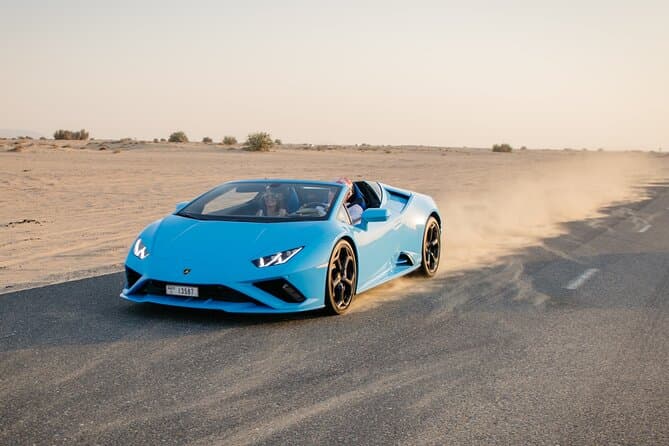
This matters when you're driving something designed to be photographed. A Lamborghini Huracán looks stunning in any conditions, but against winter's clear skies and crisp light, it becomes a photographer's dream. The colors pop. The lines stand out. The surroundings complement rather than compete with the car's presence. For those planning to document their experience, winter provides lighting conditions that summer simply cannot match.
The improved visibility also makes driving more enjoyable. You can see approaching vehicles earlier. You can appreciate the landscape surrounding you. You can actually enjoy the views that made Dubai famous rather than squinting through humidity and dust. When you're paying for an exotic car experience, seeing clearly where you're going and what's around you enhances every moment.
The Events: When Dubai Comes Alive
Winter marks Dubai's high season not just climatically but culturally. The city's event calendar explodes with activity. Dubai Shopping Festival brings sales and entertainment throughout January. The Dubai World Cup, horse racing's richest event, occurs in March. Concerts, exhibitions, sporting events, and festivals fill the calendar from November through April.
This concentration of activity means more reasons to be out, more destinations worth driving to, more occasions that justify renting something extraordinary. Arriving at the Dubai Opera in a Rolls-Royce for an evening performance feels appropriate in winter when the cultural calendar demands formal occasions. Beach clubs and hotel parties reach their peak during these months, creating perfect excuses to pilot a convertible supercar along the coast.
The social calendar's intensity also means you're more likely to see other exceptional vehicles on the roads. Dubai's car culture is year-round, but winter brings out the rarest and most exotic machinery. Spotting a Bugatti or limited-edition hypercar happens more frequently when owners know the weather won't punish their vehicles or their own comfort.
For those visiting Dubai specifically for automotive experiences, winter aligns perfectly with events like Emirates Classic Car Festival and various supercar rallies that occur during the cooler months. These gatherings wouldn't happen in summer for obvious reasons, but winter makes them not just possible but enjoyable.
The Driving Routes: Accessible Excellence
Dubai and the surrounding emirates offer extraordinary driving roads that summer's heat makes genuinely unpleasant to experience. Winter transforms these routes from ordeals into highlights.
The drive to Hatta winds through mountains with elevation changes and sweeping curves that showcase what a sports car can accomplish. In summer, even with air conditioning running at maximum, the journey feels punishing. Engine temperatures climb. You worry about overheating. The experience becomes about endurance rather than enjoyment. Winter changes the equation entirely. The drive becomes exhilarating, the mountain air refreshing, the scenery vivid rather than washed out by heat haze.
Similarly, the route to Jebel Jais in Ras Al Khaimah provides UAE's most dramatic driving road, climbing to nearly 2,000 meters elevation with hairpin turns and spectacular views. This drive is borderline masochistic in summer heat but becomes genuinely world-class during winter months when temperatures at altitude drop into the low teens and the visibility extends to the horizon.
Even simpler routes gain appeal in winter. An evening cruise along Sheikh Zayed Road, Dubai's main artery, feels different when you're not battling heat radiating off the pavement. A sunset drive through the desert to watch dusk fall over the dunes becomes pleasant rather than survivable. Beach access roads become routes you want to explore rather than necessary evils between air-conditioned spaces.
The convertible factor cannot be overstated. Dubai's coastal roads, its corniche drives, its scenic boulevards all transform when you can drop the top and experience them properly. A McLaren 750S Spider with the roof retracted in February delivers what the car's designers intended. The same drive in July delivers heatstroke.
The Performance: Engines Breathing Easy
High-performance engines generate tremendous heat. Manufacturers design cooling systems to handle this under various conditions, but physics remains undefeated. Ambient temperatures matter. An engine working in 45-degree summer heat versus 25-degree winter temperatures operates with fundamentally different thermal characteristics.
Winter's cooler air is denser, meaning more oxygen molecules per cubic meter entering the engine. More oxygen means better combustion. Better combustion means more power. The difference isn't enormous, perhaps five percent at most, but it's measurable and tangible. A naturally aspirated engine like those in the Ferrari 812 benefits particularly from dense, cool air.
Turbocharged and supercharged engines gain even more advantage. Forced induction compresses air, and that compression generates heat. Intercoolers remove some of this heat, but starting with cooler ambient air means the entire system operates more efficiently. Less heat soak means more consistent power delivery, better throttle response, and reduced likelihood of the engine management system pulling timing to protect components.
Transmissions, differentials, and brake systems all generate heat during operation. Winter's lower baseline temperatures mean these components stay further from critical thresholds. You can drive harder, longer, with less concern about overheating. Track-focused models with performance cooling systems truly shine during winter when the cooling capacity can be fully utilized rather than fighting environmental conditions.
Even tire performance improves in winter. Summer tires, which most supercars wear, are designed to operate at elevated temperatures. Getting them into their optimal operating range is easier when ambient temperatures are moderate rather than extreme. The rubber compound achieves ideal flexibility and grip without overheating, which can cause accelerated wear and reduced performance.
The Traffic: Slightly Less Insane
Dubai's traffic situation is complex year-round, but winter brings patterns that slightly favor driving enjoyment. The summer exodus when residents flee to cooler climates reverses in winter, but tourist arrivals and general activity spread more evenly throughout the day rather than concentrating during the brief morning and evening periods when summer heat becomes tolerable.
More importantly, winter encourages people to walk, use outdoor transportation, and generally spread out rather than clustering in air-conditioned spaces. This marginally reduces congestion in certain areas at certain times. It's not a dramatic difference, but when you're piloting an exotic car, every opportunity to actually move rather than sit idle in traffic improves the experience.
Winter also means more daylight activities and less concentration of everyone trying to do everything after dark when summer temperatures drop. The result is broader distribution of activity throughout the day and evening rather than the extreme peak hours that summer's climate creates.
Early morning drives become genuinely pleasant in winter. Summer mornings in Dubai start hot and get worse. Winter mornings are cool, sometimes even requiring a light jacket. The roads are emptier. The light is beautiful. A sunrise drive along the coast in something special becomes a highlight rather than a chore. Try the same drive in July and you're simply enduring conditions while waiting to return to air conditioning.
The Tourism Factor: International Energy
Dubai's winter is also peak tourist season, transforming the city's energy and atmosphere. Hotels fill with international visitors. Restaurants buzz with activity. Beach clubs host their best parties. The marina districts, the souks, the attractions all operate at maximum capacity and enthusiasm.
This influx brings tangible benefits for exotic car enthusiasts. The likelihood of encountering fellow car lovers increases. Conversations at traffic lights, in parking areas, at fuel stations become more frequent and interesting. The international crowd often includes people who genuinely appreciate seeing rare vehicles and who approach with knowledge and respect rather than just pulling out phones for photos.
The concentration of wealth and celebration during tourist season also means more legitimate reasons to be driving something extraordinary. Business meetings, celebrations, special occasions all increase in frequency. Renting a Bentley for a business dinner feels appropriate when that dinner is part of an international deal being negotiated during the buyer's winter visit to Dubai.
Photography opportunities multiply as well. The presence of international tourists means more professional and amateur photographers capturing Dubai's streets, often focusing on the exotic cars that define the city's character. Your rental vehicle might end up featured in travel blogs, Instagram accounts, and photography portfolios around the world, a small vanity perhaps, but part of the overall experience.
The Hotel and Venue Access: Open Doors
Many of Dubai's most spectacular venues embrace outdoor spaces during winter that remain largely unused during summer. Beach clubs expand their operating hours. Rooftop bars and restaurants become destinations rather than afterthoughts. Hotels host outdoor events and activations. Yacht clubs see actual yacht activity rather than vessels sitting idle in punishing heat.
This expansion of usable space means more reasons to be mobile, more destinations worth visiting, more variety in how you spend your time. A supercar rental makes more sense when you're actually moving between destinations rather than going from one air-conditioned parking garage to another with minimal time spent actually driving.
Valet services at luxury hotels become more enjoyable when stepping out of your vehicle doesn't mean immediate assault by oppressive heat. The brief walk from car to entrance becomes a moment to be seen and appreciated rather than something to minimize as quickly as possible. For those who value the arrival experience, winter makes that experience actually pleasant.
Beach access roads see more use in winter when beaches are genuinely pleasant destinations. Desert resorts become appealing for weekend escapes when desert temperatures are comfortable rather than life-threatening. Mountain retreats in Hatta and Ras Al Khaimah fill with visitors appreciating cooler temperatures and scenic drives. All these destinations become more accessible and enjoyable, creating natural opportunities to use a rental vehicle's capabilities.
The Photography: Light Like Nowhere Else
Winter light in Dubai possesses unique qualities that photographers recognize immediately. The angle of the sun creates longer, more dramatic shadows. The clear air provides no filter between lens and subject. The moderate temperatures mean you can spend time composing shots rather than rushing between air-conditioned refuges.
Golden hour, that magical period shortly after sunrise and before sunset when light turns warm and directional, becomes genuinely golden in winter. Colors saturate. Chrome and paint pop against backgrounds. The city's architecture provides endless backdrops that complement rather than overwhelm the vehicles being photographed.
For those planning to document their rental experience, winter provides conditions that summer cannot match. The car looks better. The backgrounds look better. You look better, not wilting from heat and humidity. The resulting photos become memories worth keeping rather than evidence of expensive suffering.
Professional and amateur photographers flood Dubai during winter specifically because of these lighting conditions. The same locations that produce washed-out, hazy images in summer deliver crisp, vibrant results in winter. If documentation matters to you, if you want images that do justice to the experience, winter timing is essential.
The Value Proposition: Experiencing Dubai Properly
Here's the fundamental truth: Dubai was designed to be experienced during winter. The city's infrastructure, its attractions, its entire layout makes sense when temperatures are moderate and skies are clear. Summer in Dubai requires endurance and adaptation. Winter in Dubai delivers what the architects and planners envisioned.
Renting an exotic car amplifies this seasonal difference exponentially. These vehicles are designed to be driven, enjoyed, experienced with all senses engaged. Winter makes that possible. Summer makes it a challenge that diminishes return on investment.
The rate difference between winter and summer rentals reflects demand but doesn't fully capture value difference. Yes, winter rates may be higher. But the experience you receive for that rate is fundamentally superior. You actually use the car's performance. You enjoy the drives rather than endure them. You create memories rather than checking boxes.
For visitors with flexibility in travel timing, the choice is obvious. Plan your Dubai trip during winter months specifically to align with optimal driving conditions. For residents, winter represents the season when exotic car rentals make most sense, when the investment delivers maximum enjoyment per dirham spent.
The Decision: Timing Matters
You can rent exceptional vehicles in Dubai year-round. The fleet doesn't diminish during summer. The roads don't close. The experience remains available. But availability and optimality are different considerations.
Winter transforms exotic car rental from transaction to experience. The weather cooperates. The routes beckon. The events justify the expense. The photographic opportunities multiply. The performance improves. The overall value proposition reaches its peak.
If you're planning a Dubai visit or considering when to treat yourself to something special, the answer is clear: winter delivers everything summer cannot. The car you rent will be the same. The roads you drive will be the same. But the experience you have will be fundamentally, measurably, dramatically better.
Choose your vehicle, check the calendar, and plan for winter. Your future self will thank you when you're cruising along the coast in a convertible supercar, top down, perfect temperature, clear skies, experiencing Dubai exactly as it was meant to be experienced.
Winter isn't just the best season to rent and drive in Dubai. It's the only season when the complete experience becomes possible, when every element aligns to deliver what you imagined when you first considered piloting something extraordinary through this remarkable city.